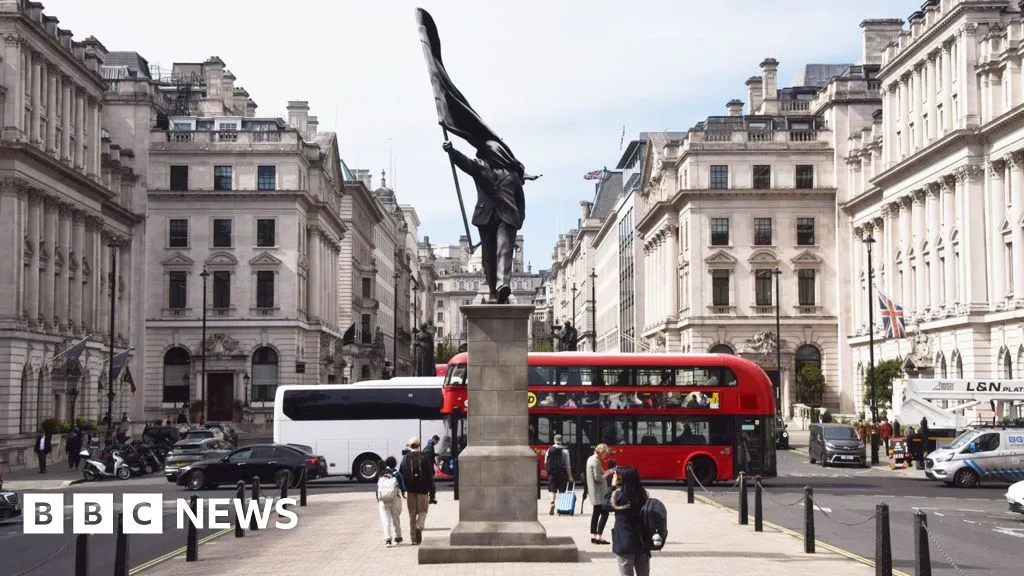
Just before dawn on April 30, 2026, a curious crowd gathered at Waterloo Place, London. They watched as a new Banksy sculpture emerged from the shadows, challenging the norms of public art.
The statue depicts a man striding off a plinth, his vision obscured by an oversized flag. It’s both humorous and poignant—a critique of leaders blinded by their own nationalism. This isn’t the first time Banksy has tackled such themes; his street art often provokes thought and conversation.
In the early hours of Wednesday, Westminster City Council received news of the installation. The council, known for its historical statues like those of King Edward VII and Florence Nightingale, welcomed this new addition to the public art scene.
As the sun rose over Buckingham Palace, Banksy confirmed his authorship through a playful video on Instagram. “It’s really clever,” commented Banksy podcaster Peak. “It captures a very precise moment in time… where the flag’s kind of blinding this puffed up, besuited leader who’s about to step off a precipice and look very silly indeed.” The humor in this statement reflects Banksy’s signature style—subversive yet accessible.
The sculpture itself is made of resin or fiberglass, materials that lend it an air of both permanence and playfulness. It stands proudly on a traffic island—a stark contrast to the more traditional forms surrounding it.
While Banksy’s identity remains shrouded in mystery, his impact on street art is undeniable. Since his first creations appeared in Bristol in the early ’90s, he has transformed urban landscapes into canvases for social commentary.
For those passing through Waterloo Place, this statue serves not just as an artistic statement but as a reminder of the complexities of leadership and identity in today’s world. Westminster City Council has stated they will not remove it—an acknowledgment of its place within London’s evolving narrative.
This moment matters because it reflects a shift in how we view public monuments. No longer just static figures commemorating history, they can also provoke discussion and reflection on contemporary issues.
You may also like