Introduction
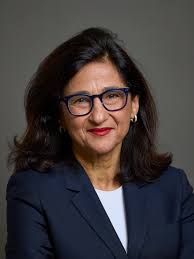
Baroness Minouche Shafik, a prominent British economist, has been making headlines recently due to her leadership position and her insightful commentary on contemporary economic issues. As the Director of the London School of Economics (LSE), her influence reaches far beyond academia, making her an important figure in public policy discussions both in the UK and internationally.
Background and Career
Born in Egypt and raised in the United States, Baroness Shafik has a rich intellectual background. She earned her undergraduate degree from the University of Massachusetts and her Master’s and Doctorate from the University of London. She has held significant positions in international finance, including roles at the World Bank and the International Monetary Fund (IMF). Notably, she served as the Deputy Governor of the Bank of England and has been involved in pivotal debates around economic recovery and financial stability.
Current Role and Key Contributions
As Director of the LSE since 2017, Baroness Shafik has continued her advocacy for inclusive economic policies. Her recent speeches focus on the challenges posed by climate change, inequality, and globalisation. During the Economic Forum held in London earlier this month, she stressed the importance of integrating sustainability into economic models, urging policymakers to rethink their approaches for a more equitable future. Furthermore, she highlighted the need for government reforms that prioritize social mobility and eradicate poverty.
Public Engagement and Impact
Baroness Shafik’s thought leadership extends into the public domain, where she often writes articles and appears on various media platforms to discuss economic trends. Her unique perspectives have resonated widely, particularly among younger audiences and those advocating for progressive change in fiscal policies. The increase in her social media following and public discussions stemming from her viewpoints indicate a growing interest in the merging of economics with social science frameworks.
Conclusion
Baroness Shafik exemplifies a new breed of economist who values the interplay between social justice and economic growth. Her continued influence within academic, public, and policy circles showcases her commitment to addressing pressing global issues. As we navigate through an increasingly complex economic landscape, her insights and leadership will be pivotal in shaping the discussions around equitable growth. The significance of her work thus cannot be overstated, as it represents a shift towards more inclusive and sustainable economic thinking.
You may also like