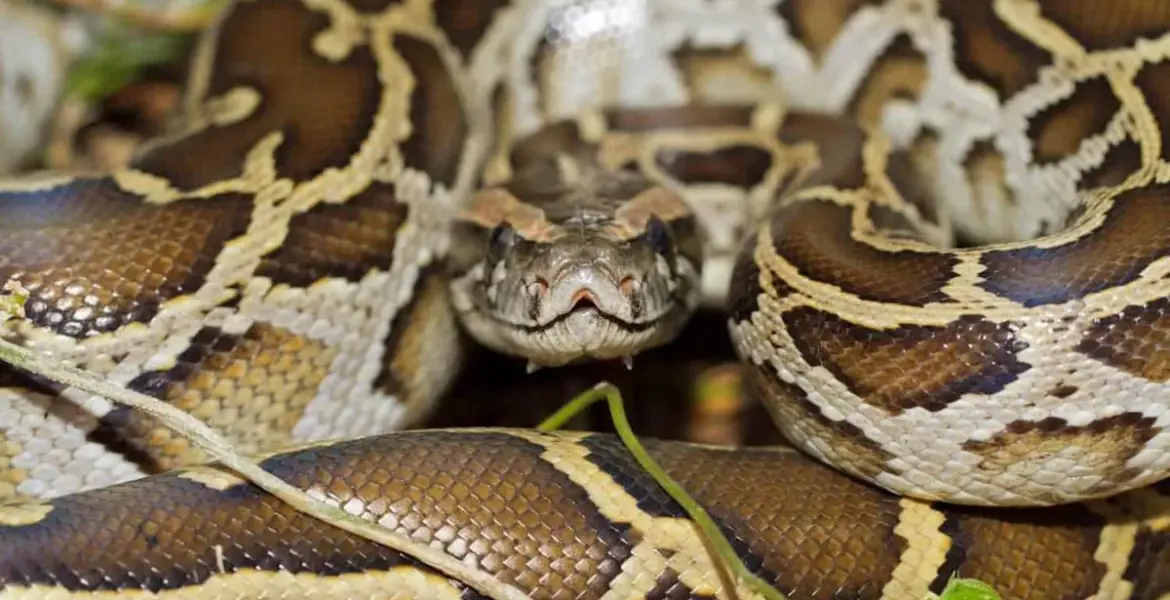
In a troubling update from the Florida Everglades, Burmese pythons continue to pose a severe threat to the region’s wildlife, with recent reports indicating that these invasive snakes have decimated the meso-mammal population by over 90 percent. This alarming statistic highlights the ongoing struggle to manage the python population, which has been a growing concern since their introduction to the area.
These formidable snakes can grow up to 18 feet long and weigh more than 200 pounds, making them one of the largest snake species in the world. Their sheer size allows them to prey on a variety of native species, including raccoons, opossums, and bobcats, whose populations have seen staggering declines of 99.3 percent, 98.9 percent, and 87.5 percent, respectively.
The impact of the Burmese python invasion is not limited to these mammals alone. Other species such as marsh rabbits, cottontail rabbits, and foxes have been extirpated from most areas where pythons have successfully invaded. The ecological balance of the Everglades is at risk, as these snakes continue to thrive in their new environment.
In 2025, the Python Action Team removed 1,022 pythons from the Everglades in an effort to control their population. However, the challenge remains daunting, as these snakes are known to kill their prey by constriction, effectively stopping blood flow to vital organs. A recent observation of a Burmese python swallowing a 77-pound white-tailed deer further underscores the threat they pose to larger native species.
Initially introduced from Southeast Asia through the pet trade, Burmese pythons began to proliferate in Florida following Hurricane Andrew in 1992. Since then, their numbers have surged, leading to significant ecological consequences.
As wildlife officials and conservationists grapple with this invasive species, the urgency to find effective management strategies grows. The public’s awareness of the issue is crucial, as community involvement can play a vital role in controlling the python population.
First reactions from environmental groups have emphasized the need for immediate action to protect Florida’s unique wildlife. “We cannot afford to lose more of our native species to these invaders,” stated a representative from a local conservation organization.
As the situation develops, the hope is that increased efforts will lead to a more balanced ecosystem in the Everglades. The fight against the Burmese python invasion is far from over, and the future of Florida’s wildlife hangs in the balance.
You may also like