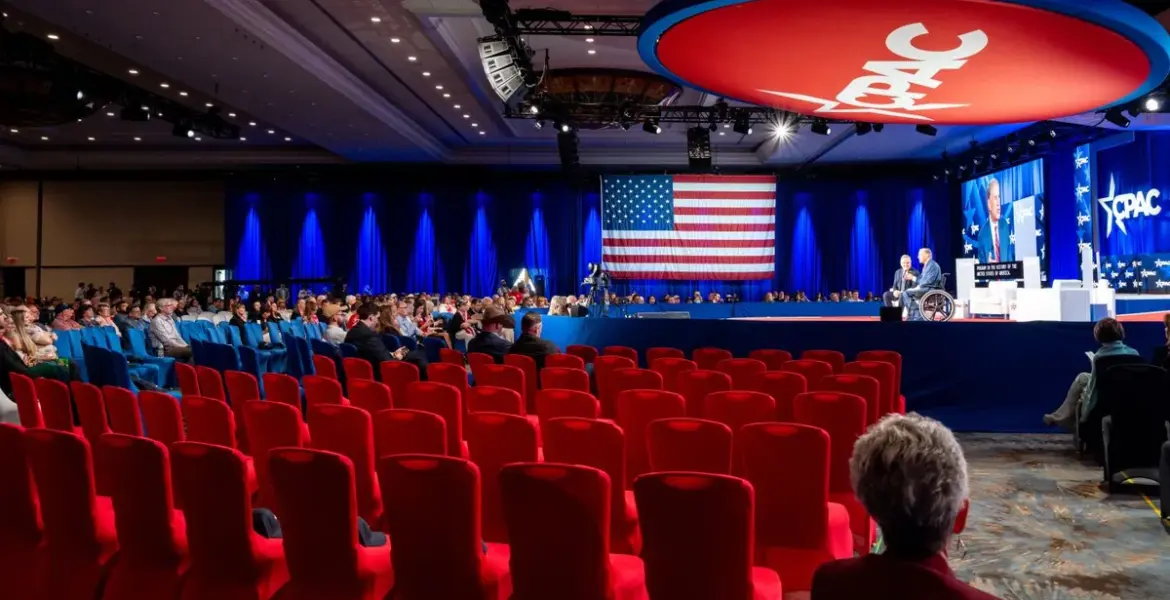
CPAC has long been regarded as a destination for conservative voters to network and organize. This year, however, the atmosphere was notably different. CPAC 2026 took place in Dallas on March 28, 2026, and for the first time in a decade, former President Donald Trump did not attend. His absence raised eyebrows and questions about his influence within the party, especially as the U.S. had initiated strikes against Iran just a month prior.
In the lead-up to the conference, a Pew Research Center survey revealed that nearly 80% of Republicans approved of Trump’s handling of the war in Iran. Yet, this support was not universal; younger Republicans and conservative-leaning independents showed signs of decreased enthusiasm for Trump regarding the conflict. This division was palpable at CPAC, where some attendees expressed feelings of betrayal.
Joseph Bolick, a participant, voiced his discontent, stating, “I feel betrayed because he’s promised no new wars.” This sentiment echoed through the conference as Matt Gaetz, a prominent figure in the Republican Party, criticized the war in Iran during his speech, arguing that “a ground invasion of Iran will make our country poorer and less safe.”
The lineup at CPAC 2026 featured many new faces in the conservative movement, with fewer candidates treating it as a campaign stop compared to previous years. The conference focused on Trump’s key policy priorities, culture war issues, and illegal immigration, reflecting the ongoing challenges the party faces.
Despite the support for military action, a Reuters/Ipsos poll indicated that Trump’s approval rating had dropped to 36%, its lowest since his return to the White House. This decline is particularly concerning as the Iran war has caused divides within Trump’s historically loyal base.
Harry Strine III, an 83-year-old attendee, expressed unwavering support for Israel, stating, “Israel is God’s people.” This perspective highlights the generational divides within the party, particularly regarding foreign policy and military intervention.
As the conference concluded, observers noted that the Republican Party is at a crossroads. With Trump’s approval waning and younger members of the party increasingly skeptical, the future direction remains uncertain. Rev. Franklin Graham remarked, “I believe God has raised him up for a time such as this, like Queen Esther,” suggesting that while Trump may face challenges, his supporters still see him as a pivotal figure.
Looking ahead, the Republican Party must navigate these internal divisions and external pressures as they prepare for the next election cycle. The dynamics at CPAC 2026 serve as a reflection of a party grappling with its identity in a rapidly changing political landscape.
You may also like