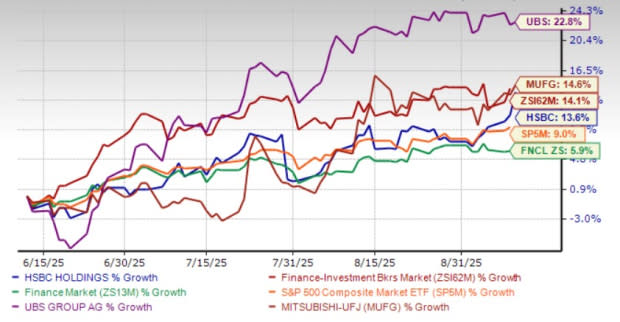
The Importance of Monitoring HSBC Share Price
The HSBC share price is a critical indicator for investors, symbolizing not just the bank’s performance but also reflecting global economic trends. As one of the largest banking and financial services organisations in the world, HSBC operates across various regions, including Asia, Europe, and the Americas. The fluctuation in its share price can significantly impact investor confidence and market behaviour.
Recent Developments Affecting HSBC Share Price
As of October 2023, HSBC’s share price has shown notable volatility influenced by multiple factors. Recently, the global economic conditions have worsened due to rising inflation rates, central bank interest rate hikes, and geopolitical tensions. In the last quarter, the bank reported a 10% increase in year-on-year profits, which initially spurred optimism among investors. However, the share price faced downward pressure as concerns over economic slowdowns in Asia emerged, particularly in China, where lockdowns and strict COVID-19 measures continue to impact growth forecasts.
Moreover, analysts have noted a bifurcation in market sentiment, with some viewing HSBC as a long-term value investment due to its strong dividend yield and robust operational model, while others are wary of the bank’s exposure to certain markets and potential regulatory challenges. This duality has further influenced trading patterns, making it essential for investors to stay informed about ongoing developments.
Market Predictions and Future Outlook
Looking ahead, analysts forecast that the HSBC share price will continue to be influenced by both macroeconomic factors and internal performance metrics. Projections indicate mild growth in the next quarter, particularly if global interest rates stabilise and economic uncertainties diminish. However, challenges remain, including the potential impact of recessionary fears and changing regulations regarding banking operations.
For investors, the key takeaway is to keep a close watch on both regional economic indicators and HSBC’s strategic responses to evolving market conditions. As global banking landscapes change, HSBC’s ability to adapt will likely play a pivotal role in its share performance, making it critical for stakeholders to remain proactive and informed.
Conclusion
The HSBC share price is not merely a reflection of the bank’s profit margins; it is a barometer of broader economic signals. For anyone looking to invest in HSBC shares, understanding the interplay of global influences, financial results, and market sentiment is paramount. As we move towards the end of 2023, staying abreast of financial news will help investors make sound decisions in a fluctuating market.
You may also like