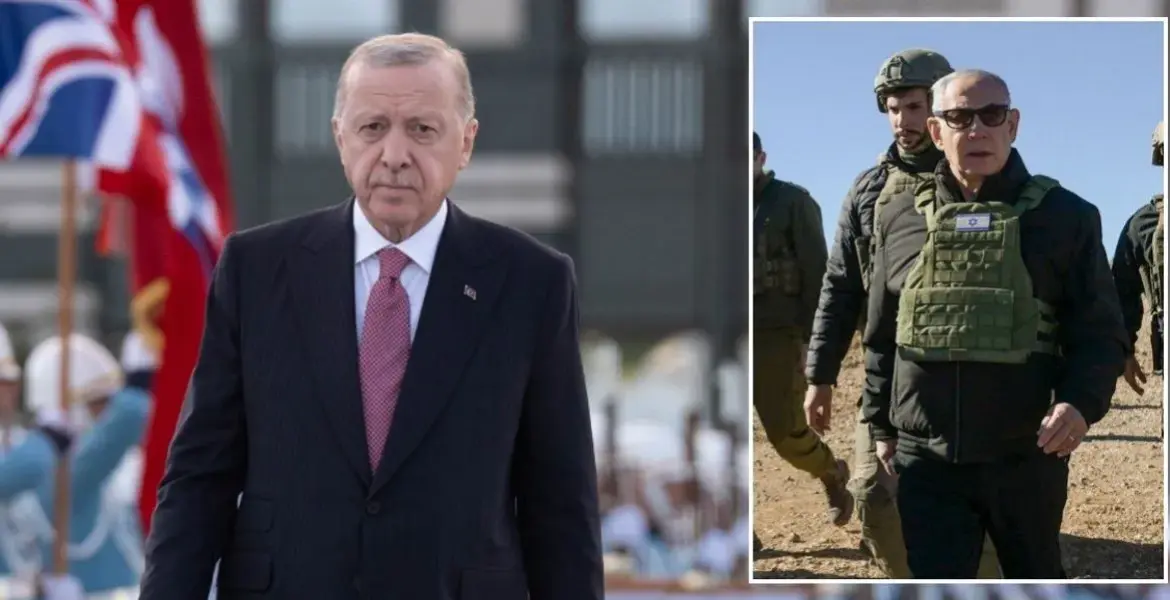
In a dramatic escalation of rhetoric, Turkish President Recep Tayyip Erdogan has threatened military action against Israel, condemning its bombardment of Lebanon as barbaric. This statement, made on April 12, 2026, comes in the wake of increasing violence in the region, where over 1.2 million Lebanese have been displaced due to Israeli attacks. Erdogan’s comments reflect a deepening crisis and a potential shift in Turkey’s military posture towards Israel.
During his address, Erdogan accused Israeli Prime Minister Benjamin Netanyahu of being “blinded by blood and hatred,” further describing the actions of the Israeli government as part of a “blood-stained genocide network.” His fiery rhetoric underscores Turkey’s position as a self-proclaimed defender of Palestinian rights, a narrative Erdogan has cultivated over the years. He stated, “We will do the same to them,” signaling a willingness to take military action if necessary.
The backdrop to Erdogan’s threats includes a recent indictment of Netanyahu and 35 Israeli officials by a Turkish court for their involvement in stopping the “Sumud” Gaza flotilla. Turkish prosecutors are pursuing sentences totaling up to 4,596 years for those named in the case, highlighting the legal and diplomatic tensions that have been brewing between the two nations. Erdogan’s government has been increasingly vocal in its condemnation of Israeli actions, which it views as oppressive towards Palestinians.
Adding to the complexity of the situation, a recent attack on the Israeli consulate in Istanbul resulted in injuries to two police officers and the death of one attacker. The assailant, Yunus Emre Sarban, had previously faced charges related to ISIS but was acquitted. This incident has raised concerns about the security environment in Turkey, where the government has been criticized for its lenient approach towards ISIS while simultaneously cracking down on political dissent.
Following the consulate attack, Turkish authorities rounded up 273 known ISIS suspects across the country, an action that has sparked debate about the government’s priorities in combating terrorism versus addressing political opposition. Erdogan’s administration has faced scrutiny for its handling of both issues, with critics arguing that the government is more focused on silencing dissent than effectively addressing the threat posed by extremist groups.
As tensions rise, Erdogan’s government has not shied away from making bold statements. The Turkish Foreign Ministry went so far as to label Netanyahu as “the Hitler of our time,” a comparison that has drawn ire and condemnation from various quarters. This inflammatory language reflects the high stakes involved in the ongoing conflict and the potential for further escalation if diplomatic solutions are not pursued.
International reactions to Erdogan’s threats have been mixed. Some observers view his statements as a necessary defense of Palestinian rights, while others see them as a dangerous provocation that could lead to military confrontation. Amichai Eliyahu, an Israeli official, dismissed Erdogan’s rhetoric, stating, “The hypocritical Erdogan doesn’t impress anyone with this current circus,” indicating a growing frustration with Turkey’s role in the conflict.
As the situation continues to unfold, the international community watches closely, aware that Erdogan’s threats could have far-reaching implications for regional stability. With both sides entrenched in their positions, the path forward remains uncertain, and details remain unconfirmed about the potential for military action. The coming days will be crucial in determining whether dialogue can prevail over conflict in this volatile region.
You may also like