Introduction to the Aurora Borealis
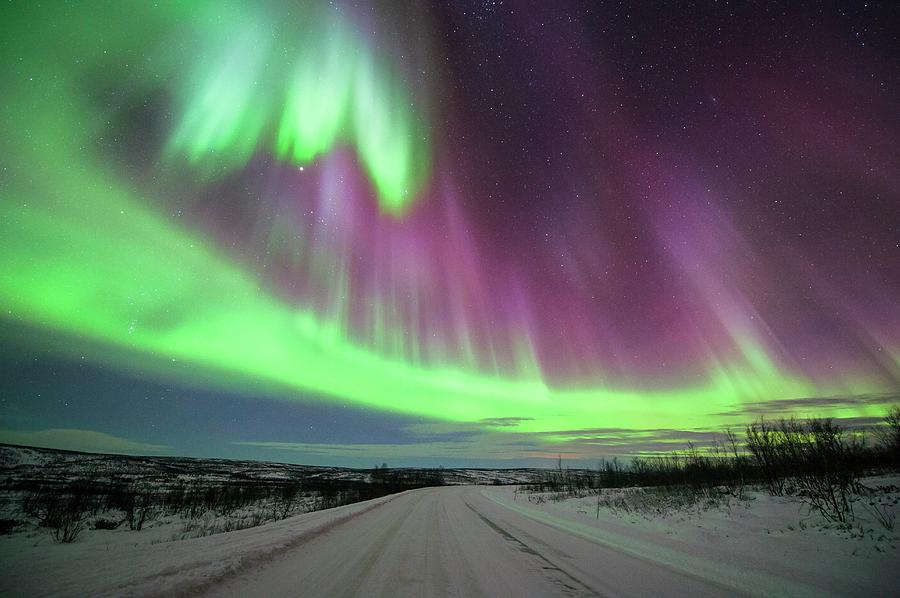
The Aurora Borealis, commonly known as the Northern Lights, is one of nature’s most stunning spectacles, captivating observers around the world. This natural light display is primarily visible in high-latitude regions around the Arctic, making it a significant topic for scientists, tourists, and cultural enthusiasts alike. The phenomenon represents a fascinating intersection of atmospheric science and myth, and it holds profound cultural significance for many indigenous peoples of the Arctic.
What Causes the Aurora Borealis?
The Aurora Borealis occurs when charged particles from the sun collide with gases in Earth’s atmosphere, resulting in vibrant lights that dance across the night sky. These charged particles are part of the solar wind, and their interaction with the Earth’s magnetic field creates the bright displays. The colours observed, ranging from green to pink and occasionally red or violet, depend on the type of gas involved. Oxygen at high altitudes produces red and pink hues, while nitrogen yields blue and purple shades.
Recent Events and Viewing Opportunities
This year, scientists have reported an uptick in auroral activity due to heightened solar activity, making it an ideal time for enthusiasts to witness the phenomenon. A notable event occurred in September 2023, when a strong solar flare resulted in auroras seen as far south as parts of the United States. For many, this was a rare opportunity to experience the lights without travel to the Arctic regions.
Tourism associated with the Aurora Borealis has also surged, with tours operating in locations such as Iceland, Norway, and Canada. These regions have reported an increase in visitors eager to photograph the stunning light displays. Local authorities are encouraging responsible tourism to preserve the natural environment that attracts so many.
Cultural Significance and Future Predictions
The Aurora Borealis has been a source of inspiration and myth for many cultures. Indigenous communities have long viewed the lights as spirits or messages from ancestors, embedding them deeply in folklore. As interest in these natural wonders grows, educators are leveraging this fascination to promote science and environmental awareness among the younger generations.
As we look to the future, advancements in technology may allow for better forecasts of auroral activity, enhancing the experience for viewers. The continued study of the Aurora Borealis not only sheds light on atmospheric science but also helps to understand climate change and its broader impacts on our planet.
Conclusion
The Aurora Borealis remains one of nature’s most magnificent displays, bringing wonder to those who witness it. As science evolves, fostering a greater understanding of this phenomenon, we can anticipate not only increased opportunities for viewing but also a deeper respect for the delicate balance of our environment. For those seeking a connection with nature, the Northern Lights continue to shine brightly on the horizon.
You may also like