In the days leading up to April 4, 2026, speculation surrounding Donald Trump’s health had been a topic of concern for many. At 79 years old, the former president had previously faced health issues, including mystery lumps and skin flare-ups, which only fueled ongoing worries about his well-being.
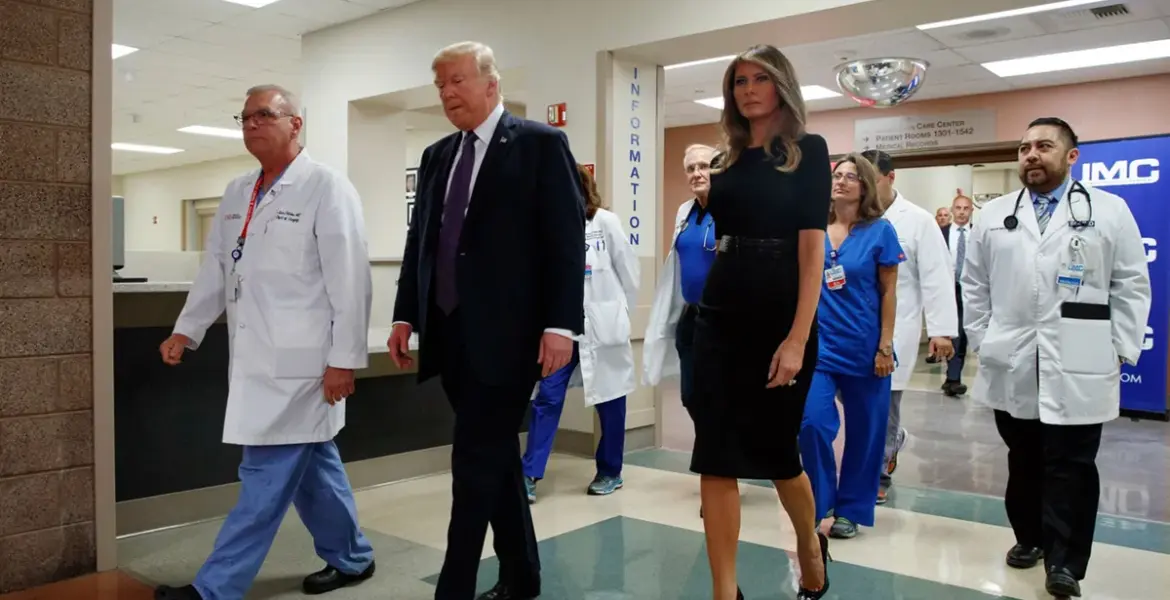
However, the situation took a decisive turn when rumors began circulating that Trump had been hospitalized at Walter Reed National Military Medical Center. These claims were bolstered by unverified reports of road closures and possible flight restrictions near the facility, leading many to question the former president’s condition.
In response to the swirling rumors, the White House quickly stepped in to clarify the situation. A spokesperson stated emphatically that Trump was not in the hospital, asserting that he had been working nonstop in the White House and Oval Office. “Fear not! President Trump literally never stops working,” the White House Rapid Response 47 account tweeted, aiming to quell the rising anxiety among supporters.
Trump’s spokesman, Steven Cheung, echoed this sentiment, emphasizing, “There has never been a President who has worked harder for the American people than President Trump.” This strong defense was aimed at countering what the White House described as “deranged liberals” spreading conspiracy theories about Trump’s health.
Despite the White House’s reassurances, the rumors had already taken root, demonstrating the power of speculation in the political arena. The uncertainty surrounding Trump’s health highlights the intense scrutiny public figures face, especially those with a history of health concerns.
As of now, details remain unconfirmed regarding whether Trump was ever hospitalized, leaving many to wonder about the truth behind the rumors. The incident serves as a reminder of how quickly misinformation can spread and the impact it can have on public perception.
In a world where every detail about a public figure’s health is dissected, the episode illustrates the fine line between concern and speculation. The White House’s strong denial may have quelled immediate fears, but the shadows of doubt linger, particularly given Trump’s previous health issues.
As the narrative unfolds, it remains crucial for the public to seek clarity from reliable sources, especially in an era where misinformation can easily cloud judgment. The ongoing discourse around Trump’s health will likely continue, as both supporters and critics remain vigilant in their observations.
You may also like