Introduction
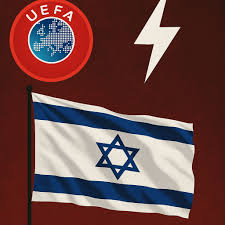
The role of Israel in UEFA (Union of European Football Associations) has garnered significant attention in recent years, both for its sporting achievements and the complex political landscape surrounding it. As a member since 1984, Israel’s involvement in European football not only showcases its athletic talent but also serves as a platform for international relations amidst regional tensions.
Israel’s Football Journey in UEFA
Israel’s national football team joined UEFA in 1984 after a long exclusion from international competition. Over the years, the team has experienced fluctuating success, with notable performances in World Cup qualifiers and European Championships. One of the most significant moments was reaching the 1970 World Cup, a feat that remains a source of national pride.
In recent UEFA competitions, the Israeli club teams have also made their mark. Hapoel Tel Aviv and Maccabi Tel Aviv have participated in the UEFA Champions League and Europa League, gaining recognition and seeking to raise the standard of Israeli football on the continental stage. The success of these clubs is pivotal for Israel’s footballing reputation and helps foster a sense of unity and pride among citizens.
Impact of Politics on Football
Despite its successes, Israel’s participation in UEFA can be fraught with political challenges. The Israeli-Palestinian conflict often spills into sports, attracting scrutiny and controversy. Some UEFA member nations have expressed concerns over playing matches in Israel, citing political issues as a reason for boycotts. This has led UEFA to navigate a delicate situation, balancing the integrity of sporting competitions with geopolitical sensitivities.
The Israeli government is aware of the significance of football as a soft power tool in diplomacy. Efforts have been made to portray Israel positively through sporting events. In recent years, there have been initiatives aimed at fostering cooperation through sport, such as youth football academies that include both Israeli and Arab players, aimed at promoting peace and coexistence.
Conclusion and Future Prospects
The future of Israel in UEFA appears to hinge on its ability to balance sports and politics effectively. As the nation continues to develop its footballing talent and foster international relationships, it is likely that we will see an ongoing dialogue about the role of sports in bridging divides. With increasing globalisation, athletics may play a crucial role in shaping perceptions and fostering unity amidst adversities.
For football fans and sports analysts, Israel’s journey in UEFA is a testament to the power of sport as a uniting force, despite the complex backdrop of regional politics. Observers will be keenly watching how these dynamics unfold in the coming years, as the football landscape continues to evolve.
You may also like