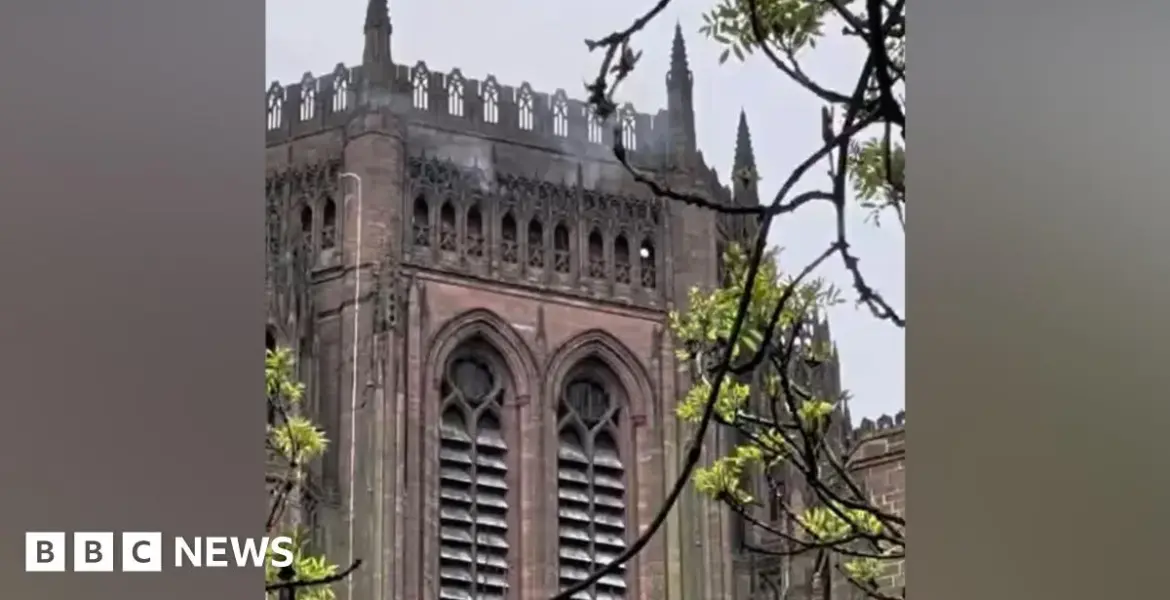
A fire erupted at the top of Liverpool Anglican Cathedral on a typical Wednesday afternoon, sending firefighters scrambling and prompting evacuations. This iconic structure, known as the largest cathedral in Britain, suddenly became a scene of chaos.
It was around 2:44 PM when the Merseyside Fire and Rescue Service received the call about the blaze. Fire crews arrived just five minutes later—at 2:49 PM—and quickly assessed the situation. The fire, caused by an electrical fault, raged at the cathedral’s tower, threatening both its stunning architecture and the safety of those nearby.
As flames flickered and smoke billowed against the backdrop of Liverpool’s skyline, nearby residents and tourists were urged to steer clear of the area. Evacuations unfolded swiftly; officials prioritized public safety above all else.
Timeline of Events:
- 2:44 PM – Fire crews alerted about the blaze.
- 2:49 PM – Firefighters arrive on scene.
- 3:12 PM – Fire extinguished after extensive efforts.
- 3:22 PM – Main body of fire declared under control.
The cathedral is not just a place of worship; it holds deep cultural significance for locals and visitors alike. Daily services often draw crowds seeking reflection amid its grand architecture. But today was different—today was marked by sirens and urgency.
A spokesperson for the cathedral expressed concern over the incident: “We are aware of the recent fire at our site and apologise for any concern or disruption this incident may have caused.” Their words echoed a sentiment shared by many—this beloved landmark is more than stone; it’s part of Liverpool’s identity.
The quick response from emergency services likely prevented greater damage. Yet, as firefighters battled the flames, questions lingered about potential impacts on tourism. With visitors flocking to see its impressive Gothic design, how will this incident affect future attendance?
The cause has been identified as electrical, but investigations may reveal more about how such a vital structure could face such peril. For now, officials continue to monitor the situation closely as they assess damage and ensure safety protocols are reinforced.
You may also like