Introduction
The discovery of interstellar objects is a groundbreaking occurrence in the field of astronomy, offering insights into the origins of our solar system and beyond. One such object, the interstellar comet 3I ATLAS, came to light thanks to the efforts of astronomers and NASA’s advanced observational capabilities. Its appearance has stirred interest among both scientists and space enthusiasts, as it serves as a unique opportunity to study a celestial body from another star system.
The Journey of 3I ATLAS
Interstellar comet 3I ATLAS, also known as A/2019 A1, was first identified in December 2021 by the Asteroid Terrestrial-impact Last Alert System (ATLAS). Initially detected in the vicinity of the Sun, this comet quickly captured the interest of scientists due to its hyperbolic trajectory, confirmed by measurements that indicated it originated from a region beyond our solar system. In fact, 3I ATLAS is the second known interstellar comet to be observed, following the discovery of ‘Oumuamua in 2017.
NASA’s Observational Efforts
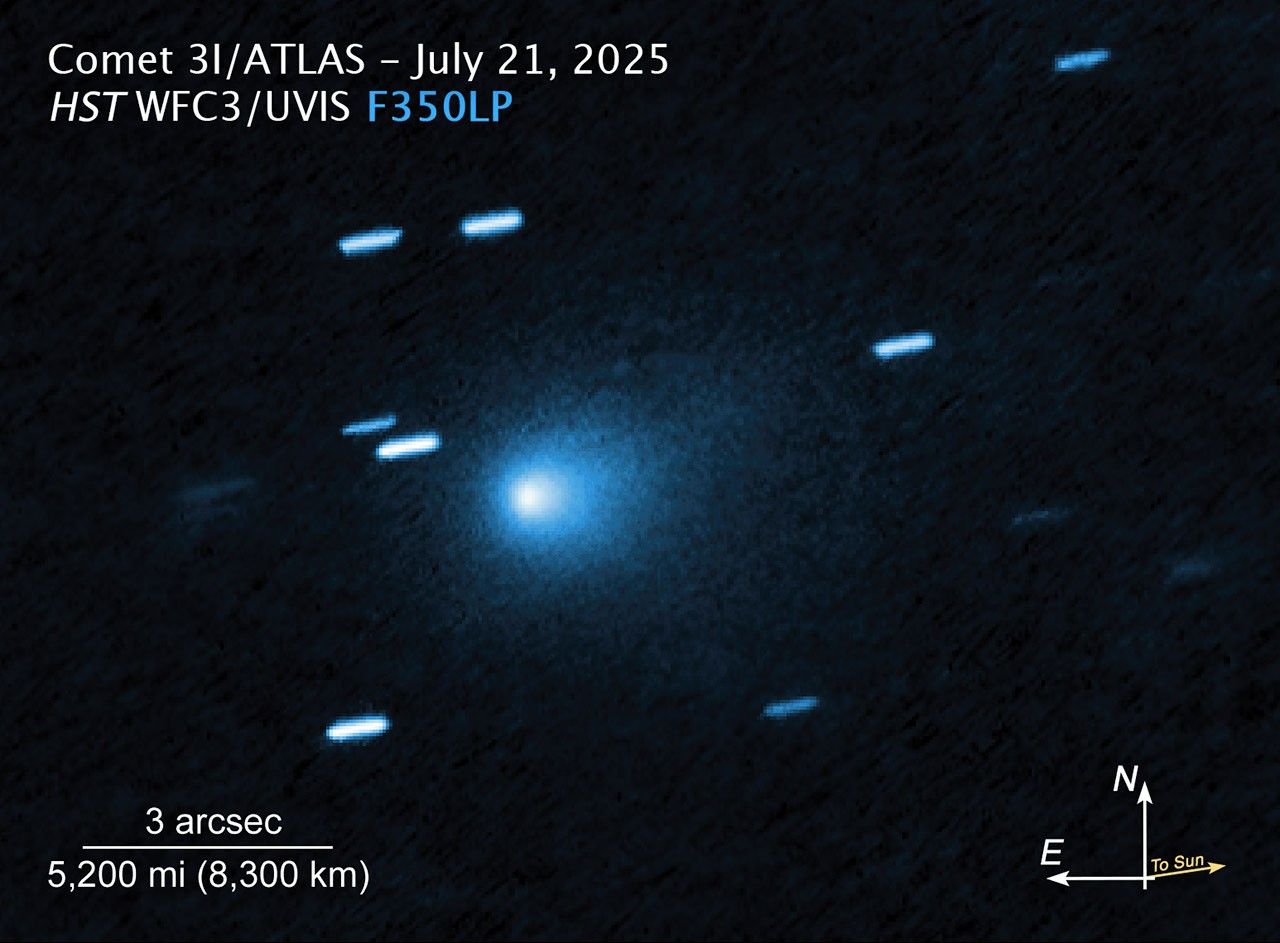
NASA’s Jet Propulsion Laboratory has played a pivotal role in monitoring and studying 3I ATLAS as it journeys through our solar system. Various space telescopes, including the Hubble Space Telescope and the observations from ground-based observatories, have provided detailed images and data regarding the comet’s composition, structure, and activity levels. Scientists are particularly focused on understanding the characteristics that differentiate interstellar comets from those originating in our solar system.
Significance and Future Research
The significance of studying comets like 3I ATLAS lies in their potential to deepen our understanding of the building blocks of planets and the processes that govern the formation of stars and planetary systems. The data collected from 3I ATLAS may reveal insights about the chemical composition of other solar systems and aid astronomical theories regarding the origins of life beyond Earth.
Conclusion
As 3I ATLAS continues its trajectory through the solar system, the astronomical community eagerly anticipates future findings that stem from ongoing observations and analyses. Its presence not only enriches our knowledge of celestial phenomena but also ignites the possibility of further interstellar objects being discovered. As technological advancements improve our observational capabilities, the pursuit of understanding the universe continues to inspire researchers and enthusiasts alike.
You may also like