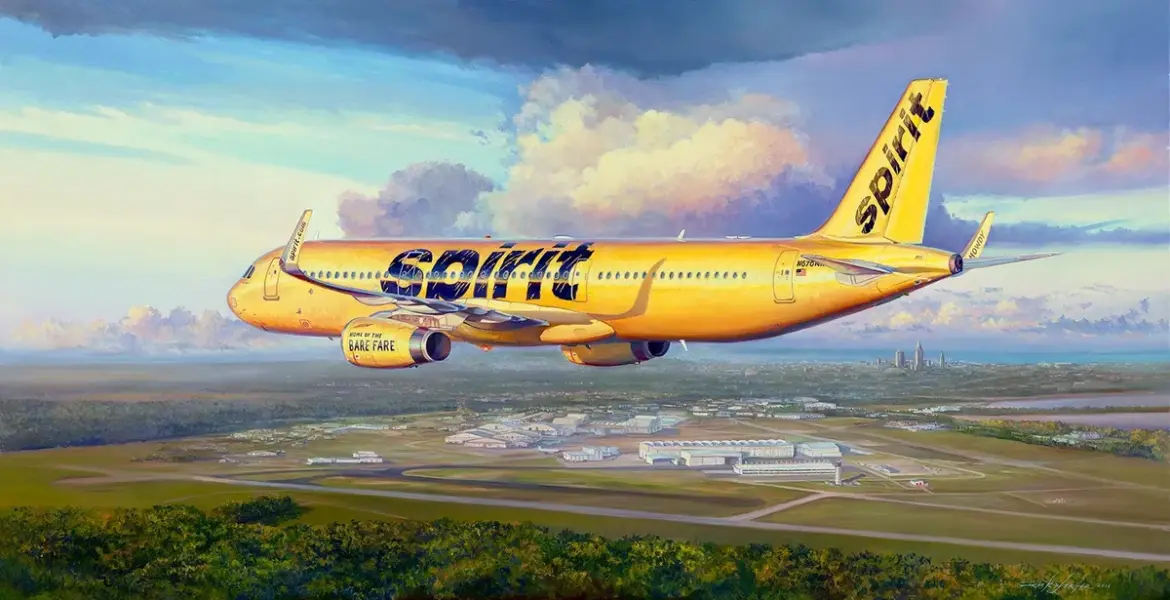
Spirit Airlines is preparing to shut down after failing to secure a crucial $500 million bailout from the Trump administration. This decision comes as the airline grapples with mounting debt and soaring operational costs, leaving its future hanging in the balance.
As of August 2025, Spirit Airlines has accumulated about $7.4 billion in debt. The airline has faced numerous financial challenges, filing for bankruptcy protection twice since 2024. Losses have exceeded $2.5 billion since 2020, driven by the COVID-19 pandemic and rising jet fuel prices.
The Trump administration’s bailout offer was seen as a last-ditch effort to save the airline, which holds a 3.9% market share in the U.S. domestic market. Jet fuel prices have surged at least 40% since the start of the Iran war, further straining Spirit’s finances. Before downsizing its fleet, Spirit served more than 60 destinations.
The potential shutdown raises concerns for approximately 14,000 employees. Donald Trump himself remarked, “I’d love somebody to buy Spirit. It’s 14,000 jobs, and maybe the federal government should help that one out.” Yet, experts warn that bailing out or buying Spirit may not address deeper issues within the airline industry.
William McGee stated, “Bailing out or buying out Spirit won’t solve the long-term, systemic competition and stability problems with the airline industry.” The urgency is palpable—if Spirit Airlines liquidates, it would mark the first major U.S. carrier to do so since the 2008 recession.
No timeline has been shared regarding when or if Spirit will shut down completely. As discussions continue, officials remain focused on finding solutions to stabilize an industry battered by rising costs and changing demand.
You may also like