Introduction
The Roman Empire, one of the most powerful civilisations in history, continues to shape our world today. Its political systems, legal frameworks, and cultural achievements have left an indelible mark on modern society. Understanding the relevance of Roman history provides insight into contemporary governance, architecture, and language.
Historical Context
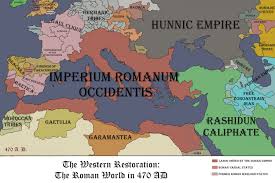
The Roman Empire, at its height around 117 AD, spanned three continents, including Europe, North Africa, and parts of Asia. Its diverse cultures and progressive administrative practices allowed it to maintain control over a vast territory for centuries. The fall of Rome in 476 AD marked a significant turning point, leading to the Middle Ages, but the influence of Roman law and governance persists in many democratic societies today.
Legal and Political Legacy
One of the most significant impacts of the Roman Empire is its legal system. The foundation of modern legal practices, particularly in Western nations, is built on Roman law, particularly the principles set out in the Twelve Tables and the Justinian Code. Many laws and legal concepts—such as contracts, torts, and personal rights—can be traced back to Roman jurisprudence. Furthermore, the idea of a Republic, where officials are elected to serve the state’s interests, stems from the Roman Republic, which dates back to 509 BC.
Cultural Contributions
In addition to legal and political influences, the Romans made significant contributions to architecture, engineering, and art. The development of concrete, aqueducts, and arched structures laid the groundwork for modern engineering practices. Iconic Roman structures like the Colosseum and the Pantheon remain architectural inspirations today.
The Language of the Romans
The Latin language, spoken by Romans, is the progenitor of the Romance languages, including Spanish, French, Italian, Portuguese, and Romanian. Even in the English language, many legal, scientific, and literary terms have Latin roots, highlighting the continual relevance of Roman linguistic contributions.
Conclusion
The legacy of the Roman Empire is an integral part of our modern world. Its advancements in law, governance, and culture have profoundly influenced the development of contemporary societies. As we study this ancient civilization, we gain valuable insights that inform current debates in politics, law, and social structure. Understanding the past is essential for shaping a well-informed future, and the lessons from Roman history are as pertinent now as they were centuries ago.
You may also like