Introduction to the Butterfly Shaped Hole
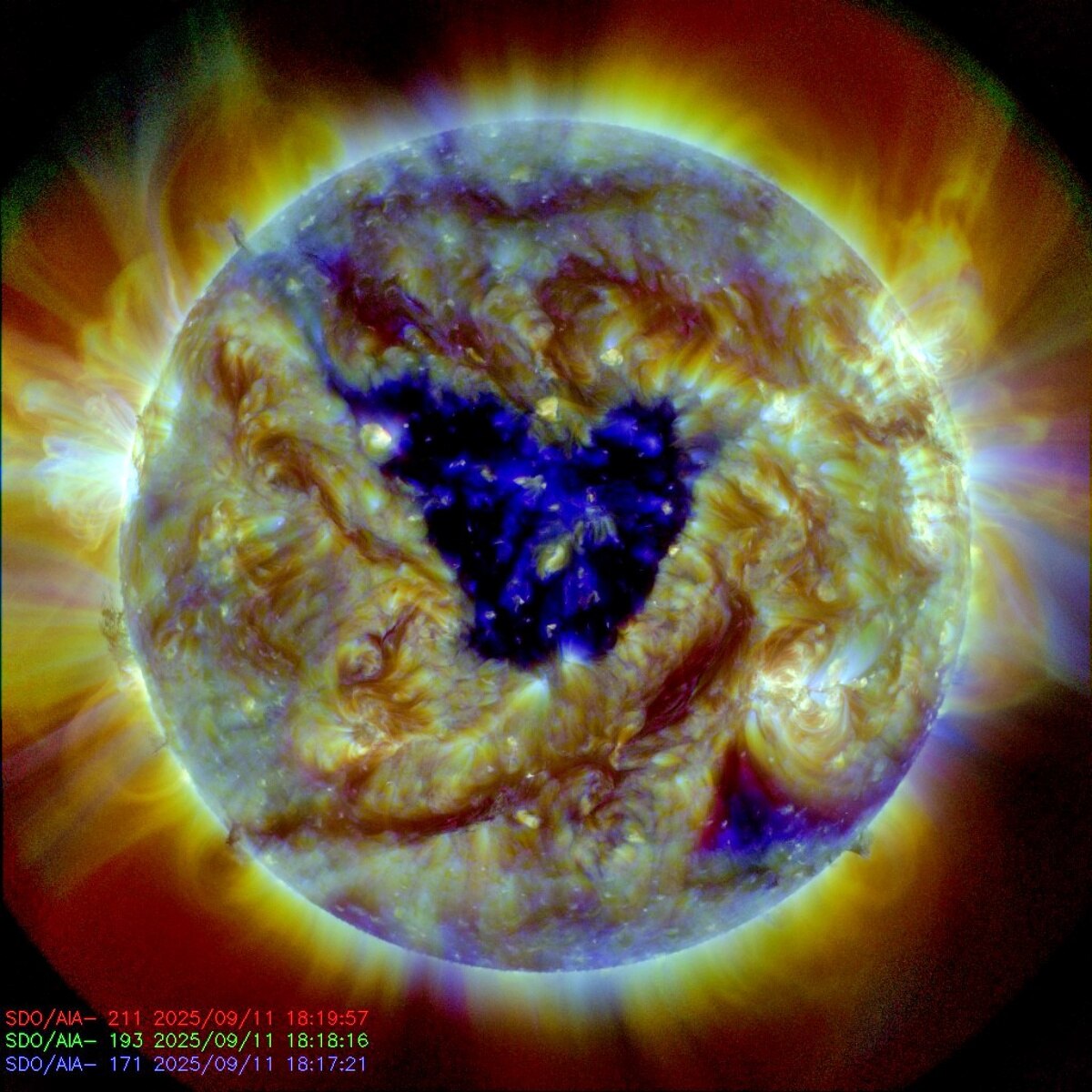
Recently, a stunning phenomenon was observed on the Sun – a butterfly shaped hole in the solar atmosphere, also known as a coronal hole. This discovery has sparked interest within the scientific community due to its implications for solar wind and space weather. Understanding such structures not only enhances our knowledge of the Sun’s activity but also has potential repercussions for Earth’s climate and communication systems.
Details of the Discovery
The butterfly shaped hole was first noted by the Solar Dynamics Observatory (SDO), a NASA mission that continuously monitors the Sun’s activity. The unique shape of the coronal hole was visible in ultraviolet light, providing valuable data about solar wind, which refers to the stream of charged particles emitted by the Sun. During the observation period, specialists noted that this particular hole was approximately 30% larger than typical coronal holes, allowing for an increased amount of solar wind to escape into space.
Scientific Significance
Coronal holes are significant for several reasons. They are associated with lower temperatures and densities in the solar atmosphere, allowing solar winds to flow more freely. When these solar winds reach Earth, they can affect satellite operations, power grids, and can even lead to beautiful auroras. Moreover, understanding the characteristics and behavior of coronal holes helps ground-based and satellite-based technologies prepare for potential solar storms, which can disrupt communication and navigation systems.
Public and Scientific Reaction
The discovery has not only captivated scientists but also the general public, sparking discussions on social media and various science forums. Experts have emphasized the beauty and complexity of the Sun’s behavior, fueling interest in solar studies. As more data is collected, researchers are hopeful these findings will lead to advancements in space weather forecasting and a deeper understanding of our closest star.
Conclusion: What Lies Ahead?
The butterfly shaped hole on the Sun is an exciting reminder of the dynamic nature of our solar system. As solar activity continues to be monitored, scientists remain committed to studying these phenomena. The ongoing research holds promise for improving our understanding of solar dynamics and enhancing our preparedness for space weather events. As we delve deeper into solar studies, each discovery adds a piece to the puzzle of how the Sun influences not just our planet, but the entire solar system.
You may also like