Introduction
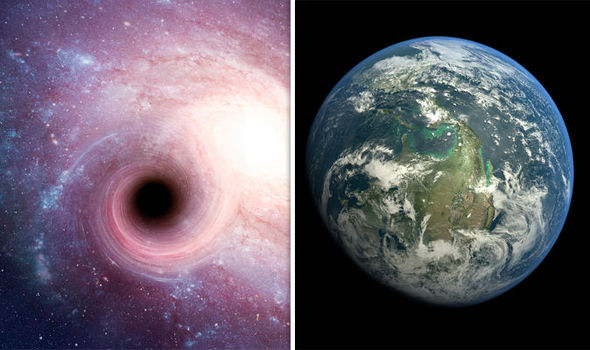
The study of black holes has long fascinated astronomers and astrophysicists alike, particularly the supermassive black hole located at the centre of our galaxy, the Milky Way. Known as Sagittarius A*, this black hole plays a crucial role in our understanding of galaxy formation and evolution. Recent advancements in observational technology have led to significant discoveries about this enigmatic entity, raising important questions about its behaviour, mass, and influence on surrounding celestial bodies.
The Discovery and Observation of Sagittarius A*
For decades, Sagittarius A* was a source of intrigue, with the first solid evidence of its existence emerging in the 1990s through the work of the UCLA Galactic Centre group and the use of radio telescopes. In 2022, astronomers combined data from multiple observatories to capture unprecedented details of the black hole, providing new insights into its mass, estimated at about 4.6 million times that of our Sun. This estimation was supported by various techniques, including the monitoring of stellar orbits around Sagittarius A*.
Importance of Recent Findings
Recent studies have highlighted not only the mass of Sagittarius A* but also its surprisingly calm behaviour. Unlike other active black holes that can emit intense radiation, Sagittarius A* appears relatively quiet, suggesting that it may have periods of dormancy. This calmness is significant as it challenges previous assumptions about black holes at the centres of galaxies, implying a more complex interaction between them and their host galaxies. Additionally, the studies provide important data on the dynamics of the region around Sagittarius A*, including the effects on nearby stars and gas clouds.
The Future of Black Hole Research
As technology continues to advance, future research on Sagittarius A* promises to yield even more fascinating discoveries. Projects like the Event Horizon Telescope (EHT) aim to capture detailed images of the black hole’s event horizon, enabling scientists to further investigate its properties and behaviour. Moreover, the insights gained from Sagittarius A* could extend beyond our galaxy, offering clues about the fundamental nature of black holes throughout the universe.
Conclusion
The Milky Way black hole remains a pivotal subject in modern astrophysics, shedding light on the complexities of our galaxy’s structure and dynamics. The recent discoveries concerning Sagittarius A* not only deepen our comprehension of black holes but also redefine their role in galaxy formation. As researchers continue to explore this mighty cosmic phenomenon, the implications of their findings will likely resonate throughout our understanding of the universe and its workings.
You may also like