Introduction
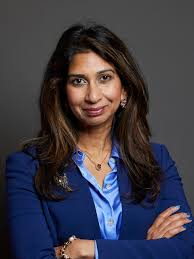
Suella Braverman, the current British Home Secretary, has increasingly become a notable figure in UK politics. As a member of the Conservative Party, her decisions and policies have significant implications for issues such as immigration, national security, and crime. Understanding her role and the impact of her policies is crucial, particularly in a climate where these issues are at the forefront of public discourse.
Background and Political Ascendancy
Braverman was born on April 3, 1980, in Harrow, London, to Indian parents who arrived in the UK in the 1960s. She was educated at Queen’s College, Oxford, and later completed her legal studies at the University of Bristol. After a successful career as a barrister, specialising in international law, Braverman entered politics and was elected as the Member of Parliament (MP) for Fareham in 2015.
Braverman quickly climbed the ranks of the Conservative Party, becoming a prominent voice during her tenure as Attorney General before her current role as Home Secretary since September 2022. Her ascent reflects her ability to navigate complex political landscapes, manage controversies and respond to the public’s pressing concerns.
Key Policies and Initiatives
As Home Secretary, Braverman has prioritised policies that align closely with the Conservative Party’s stance on law and order. One of her contentious initiatives includes a robust approach to immigration, advocating for stricter border controls and a crackdown on illegal crossings, particularly across the English Channel. Her policies have drawn both support and criticism: supporters claim such measures are necessary for national security, while critics argue they risk undermining the rights of asylum seekers.
Moreover, Braverman’s commitment to public safety has manifested in proposals to bolster police funding and enhance community policing efforts. Her advocacy for tougher sentences for violent criminals has garnered attention, reflecting a broader Conservative agenda aimed at reducing crime rates.
Challenges Ahead
Braverman faces numerous challenges in her role, including rising crime rates and ongoing debates over immigration policy that continue to polarise public opinion. Furthermore, within her party, she faces scrutiny from factions that push for varying approaches to handling immigration issues and law enforcement. The potential impact of these challenges on her political career remains to be seen.
Conclusion
Suella Braverman’s continued rise in British politics highlights the importance of strong leadership in addressing the nation’s most pressing issues. As she navigates her role as Home Secretary, her policies and effectiveness will likely shape not just the current Conservative agenda but also influence public perception of the party leading into future elections. With ongoing debates surrounding immigration and crime, Braverman’s actions will remain a focal point for both supporters and critics alike in the coming years.
You may also like