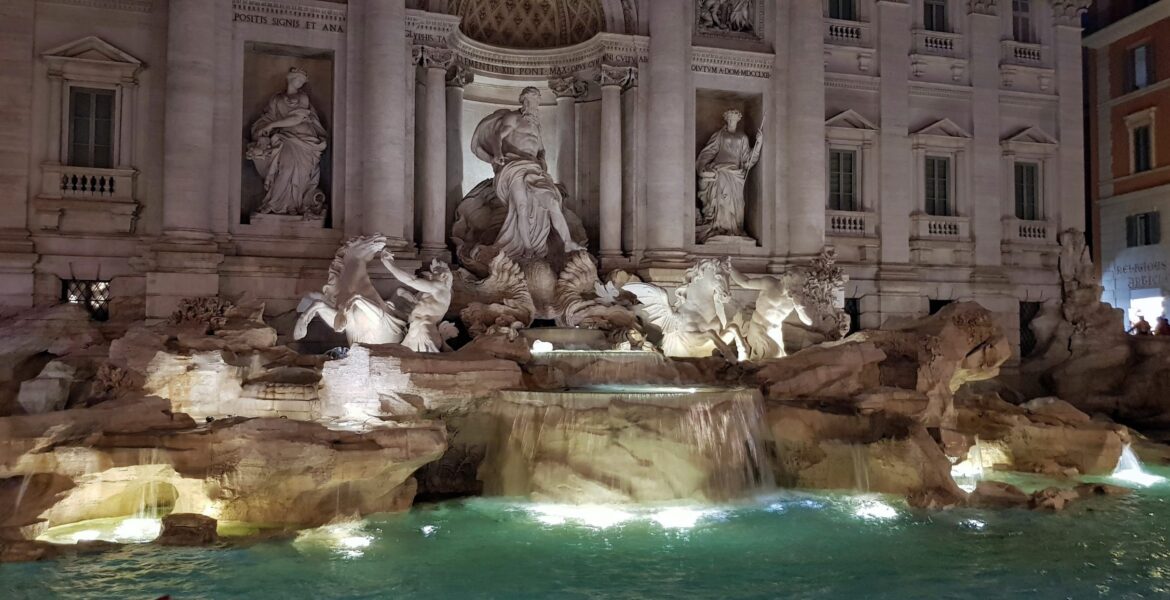
Introduction to the Trevi Fountain
The Trevi Fountain, located in Rome, Italy, stands as one of the most iconic and visited landmarks in the world. This Baroque masterpiece attracts millions of tourists each year, not only for its stunning architectural beauty but also for its rich history and cultural significance. The fountain serves as a vibrant centerpiece in the bustling city, symbolising the allure of Rome’s artistic heritage and the tradition of tossing coins for good fortune.
A Historical Overview
The Trevi Fountain’s origins date back to ancient Rome when it served as the terminal point of the Aqua Virgo aqueduct, constructed in 19 BC. Its current form was completed in 1762, following designs by the Italian architect Nicola Salvi. The fountain combines dynamic sculptures, pools of shimmering water, and intricate reliefs, depicting the god Neptune, surrounded by sea horses and tritons. The meticulous details are a testament to the artistic vision of the 18th century and highlight the importance of water supply in urban Italian life.
Recent Events and Conservation Efforts
In recent years, the Trevi Fountain has undergone significant restoration efforts aimed at preserving its grandeur for future generations. These restoration projects, led by local authorities with the support of private sponsors, focus on cleaning the fountain, repairing damages, and revitalising the surrounding area. In 2021, a comprehensive restoration was completed, which improved the fountain’s structures and ensured the longevity of its artistic elements. These conservation efforts are critical, as pollution and environmental factors pose a constant threat to such an important cultural site.
The Cultural Significance of the Tradition
A widely known tradition associated with the Trevi Fountain is the act of tossing a coin into its waters. This practice is said to guarantee the thrower a return to Rome, symbolising hope and the desire to revisit this enchanting city. According to local lore, approximately €1.5 million is collected each year from the fountain, which is donated to charity and used to support the city’s social projects. This not only reinforces the fountain’s role as a tourist attraction but also as a contributor to the local community.
Conclusion: The Trevi Fountain’s Ongoing Legacy
The Trevi Fountain remains an enduring symbol of Rome’s artistic and architectural excellence. Its intricate designs, historical significance, and the traditions that surround it continue to captivate both locals and visitors alike. As Rome moves forward, ongoing conservation efforts and the continued importance of cultural heritage will ensure that the Trevi Fountain remains a beloved part of the city’s landscape for generations to come.
You may also like