Introduction
The Nikkei 225 serves as a crucial indicator of Japan’s economic health and investor sentiment. As the primary stock market index for the Tokyo Stock Exchange (TSE), it comprises 225 prominent Japanese companies across various sectors. Understanding the movements within the Nikkei 225 is essential for investors and economists alike, as it reflects broader trends within the Japanese economy and provides insights into regional and global market dynamics.
Recent Developments
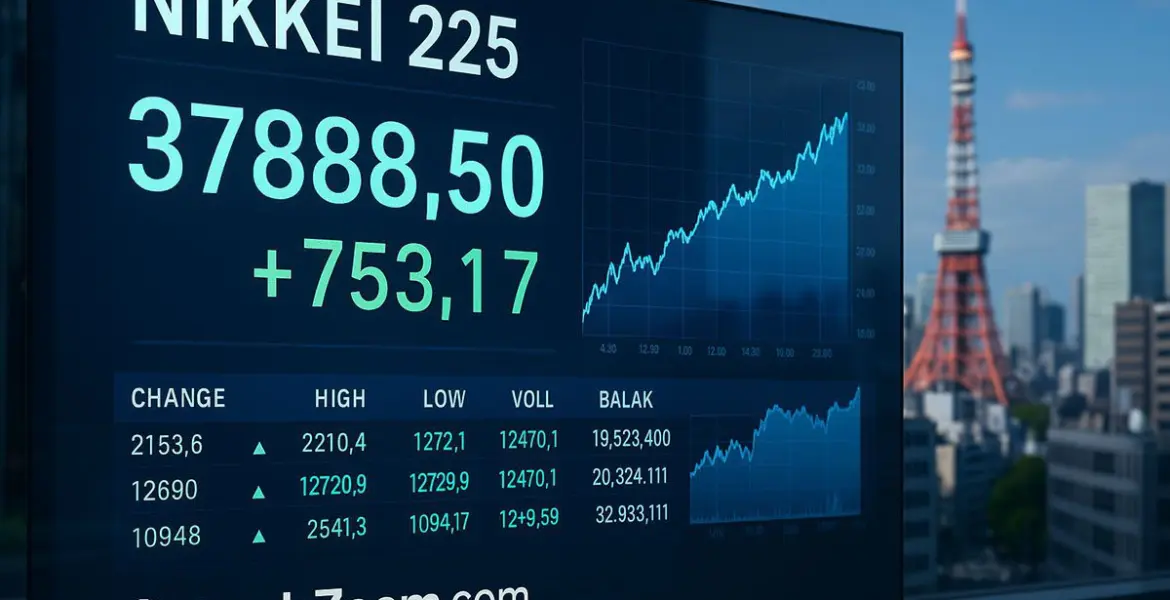
As of late 2023, the Nikkei 225 has shown a strong performance, driven by a combination of domestic reforms, foreign investments, and improving corporate earnings. The index reached a three-decade high in October 2023, closing at approximately 35,000 points. This surge can be attributed to several factors, including the Bank of Japan’s dovish monetary policy, which has kept interest rates low, and the government’s stimulus measures aimed at bolstering investor confidence during a recovering post-pandemic economy.
Furthermore, technological advancements within key industries such as electronics and automotive manufacturing have helped Japanese corporations perform exceptionally well. Prominent companies like Sony, Toyota, and SoftBank have contributed significantly to the index’s rise. Analysts suggest that the increasing global demand for advanced technology and electric vehicles enhances these companies’ stock performance and strengthens the overall index.
Global Impact and Significance
The Nikkei 225 is not only a determinant of Japan’s economic landscape but also acts as a bellwether for the broader Asian markets. Fluctuations in the index can influence investor behaviour across various global markets, particularly in emerging economies looking to attract foreign investment. As such, a strong Nikkei 225 may instill confidence in global investors, leading to increased capital flows into Asia.
However, analysts caution that geopolitical tensions, such as trade disputes and fluctuations in energy prices, could pose risks to the stability of the Nikkei 225. Events such as the ongoing situation surrounding China’s economic performance and relations with the United States will undeniably affect market perceptions within Japan.
Conclusion
The Nikkei 225 remains a vital economic barometer for Japan, reflecting the fortunes of its economy and its companies. With a current bullish trend, it showcases the resilience of Japanese industries in the face of global challenges. Moving forward, investors should closely monitor the index’s performance as it responds to both domestic policies and international economic developments. Understanding the nuances of the Nikkei 225 provides valuable insights not only into the Japanese market but also into global economic trends.
You may also like