The Fascinating Phenomenon of the Blood Moon
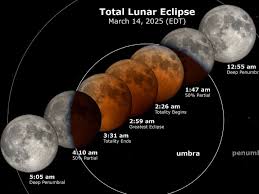
A total lunar eclipse, often referred to as a blood moon, occurs when the Earth positions itself directly between the sun and the moon, causing the Earth’s shadow to completely cover the moon. During this event, the moon can acquire a reddish hue, giving it the name ‘blood moon.’ This phenomenon not only draws skywatchers’ attention but also has deep cultural significance across various societies.
Recent Events and Observations
On November 8, 2022, the world witnessed a remarkable total lunar eclipse, with the moon appearing particularly striking against the backdrop of the night sky. Astronomers noted that this event was visible across various regions, including North America, parts of Asia, and Australia, where observers reported vivid views of the moon turning a deep red during totality.
According to NASA data, this eclipse lasted approximately 85 minutes, with totality phases offering a spectacular view. As 2023 progresses, several upcoming opportunities for viewing blood moons are anticipated, with particular excitement building for the total lunar eclipse expected on May 15-16, 2022. As these events approach, astronomers encourage enthusiasts to prepare their telescopes.
Cultural Significance and Scientific Studies
The blood moon holds significant cultural importance in many civilizations. For example, it is often associated with various myths and superstitions. In some cultures, a blood moon is interpreted as a harbinger of doom, while in others, it is celebrated as a sign of renewal and a new beginning. Scientific studies of the blood moon provide insights into lunar geology and the composition of the moon’s surface, as well as informing our understanding of Earth’s atmosphere.
Conclusion: What Lies Ahead
The total lunar eclipse blood moon represents a unique intersection of science, culture, and natural beauty that captivates audiences worldwide. With each passing event, public interest in astronomical phenomena continues to grow, highlighting the importance of engagement with science and nature. As people prepare for the next blood moon, they can look forward to the beauty it brings, fostering a deeper connection with the universe and encouraging collective exploration of astronomy.
You may also like