Introduction
The relationship between the United States and Australia is multifaceted and significant, spanning a range of areas including politics, culture, trade, and sports. Understanding the differences and similarities between these two nations offers insights into their global roles and bilateral relations. Both countries are known for their vast landscapes, vibrant cultures, and influential economies, making the comparison relevant in today’s interconnected world.
Political Landscape
Politically, the USA operates as a federal republic with a presidential system, while Australia is a parliamentary democracy and constitutional monarchy. Both countries uphold democratic values, but their political frameworks are distinctive. In recent times, the USA has seen significant political polarization, particularly surrounding key issues like healthcare and immigration. In contrast, Australia’s political climate has focused on responses to climate change and management of its diverse population.
Cultural Connections
Culturally, both nations share a rich tapestry influenced by their histories of immigration, Indigenous cultures, and British colonial roots. The USA is renowned for its entertainment industry, primarily Hollywood, which has a far-reaching influence globally. Australia, on the other hand, boasts a unique identity shaped by its Indigenous heritage and diverse immigrant communities, contributing to a vibrant arts scene. Furthermore, both countries exhibit a strong passion for sports, but the sports themselves often differ, such as American football versus Australian rules football.
Economic Overview
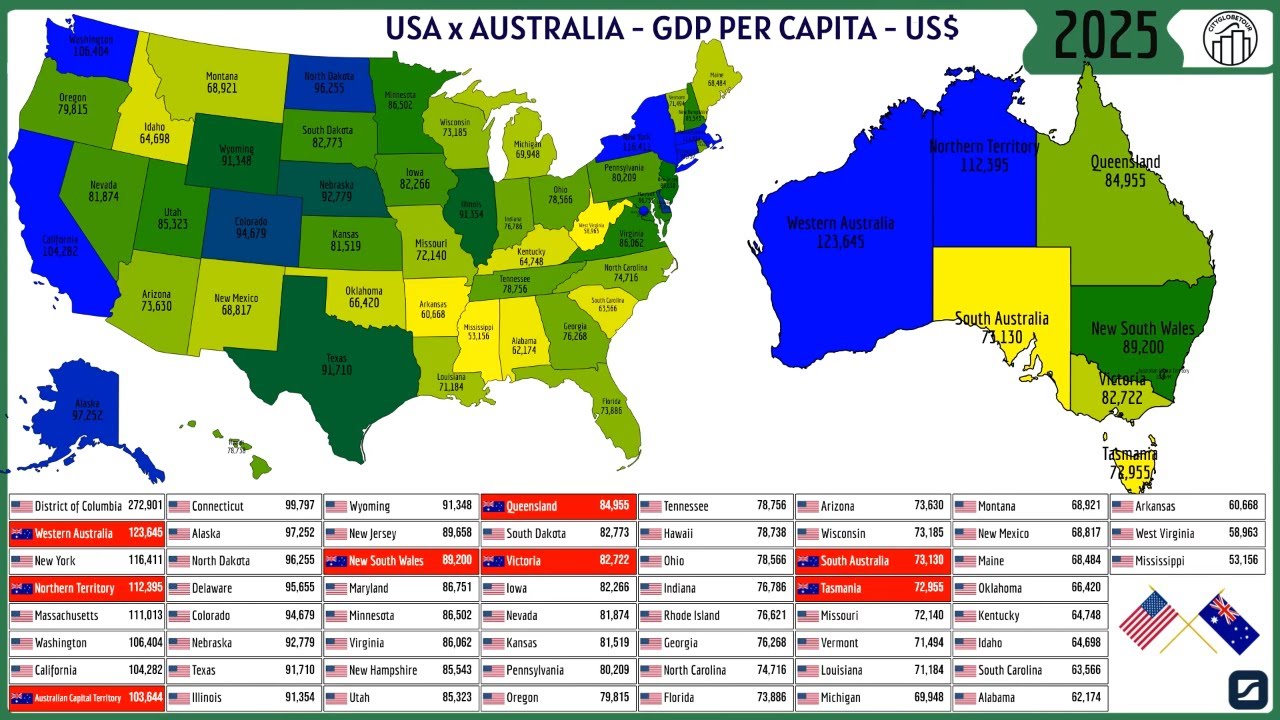
Economically, the USA is one of the largest economies globally and a leader in technological innovation and finance. Australia, while smaller, has a robust economy characterised by its natural resources, particularly mining and agriculture. The two economies are interlinked, with significant trade occurring between them, particularly in goods and services. The USA ranks as Australia’s third-largest trading partner, highlighting a vital economic relationship.
Conclusion
The ongoing comparison of the USA and Australia reveals a relationship defined by shared values yet marked by distinct differences. Understanding these factors is crucial for fostering mutual respect and collaboration in an ever-evolving global arena. As both nations navigate challenges like climate change and economic uncertainty, their partnership is likely to grow more important in the coming years. For readers, appreciating the contrasts and connections between these two dynamic countries can enhance one’s understanding of global affairs and cultural interactions.
You may also like