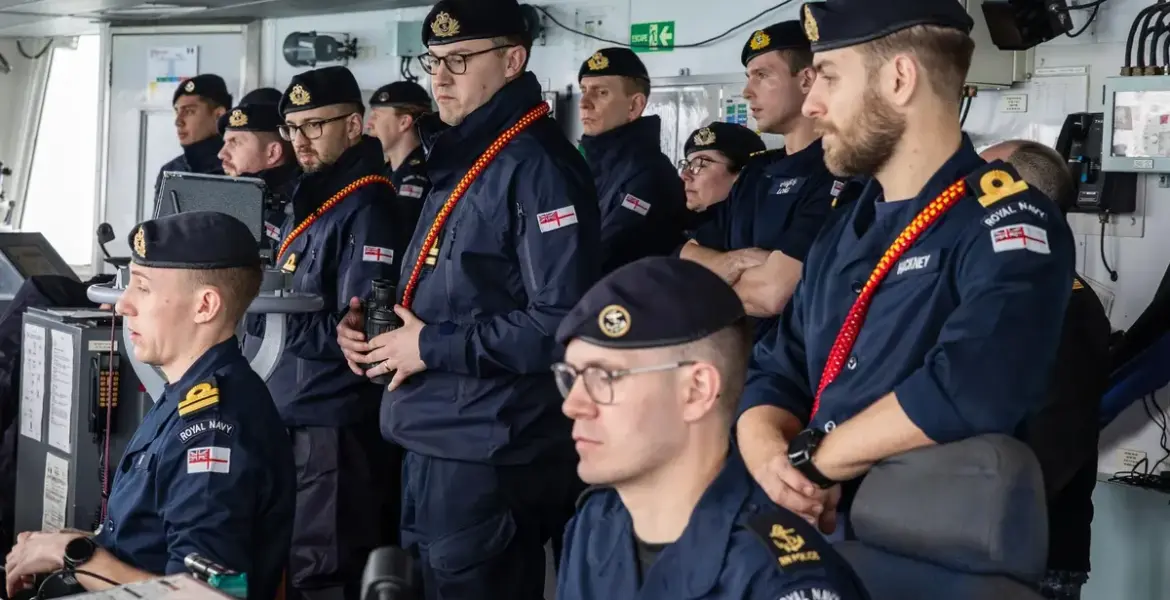
For the first time, all Royal Navy recruits will complete a 10-week Initial Naval Training course at HMS Raleigh starting June 1, 2026. This unified program aims to reflect modern operational practices and create a shared foundation for both Officers and Ratings.
The new system marks a pivotal change—previously, Officers and Ratings followed separate training pathways. Now, they’ll embark on this journey together, eliminating redundancy in their training pipeline. After the initial course, Officers will transition to a redesigned 14-week commissioning course at the Britannia Royal Naval College.
This update is part of the Royal Navy’s broader strategy to modernize its training programs. The First Sea Lord’s Warfighting Ready by 2029 plan emphasizes preparing leaders who can navigate fast-moving and contested environments. Rear Admiral Andrew Rose noted that “the Royal Navy has always adapted to maintain advantage over emerging threats.”
Key aspects of the new training system:
- The initial training course lasts for ten weeks.
- Officers will complete a fourteen-week commissioning course at Britannia Royal Naval College.
- This approach aims to strengthen operational effectiveness.
- No redundancies are expected as a result of this realignment.
- The first cohort of officer cadets will begin on June 1, 2026.
Captain Andrew Bray emphasized that everyone must meet the high standards demanded by the Royal Navy. “This modernised system strengthens our ability to generate capable, confident and mission-ready leaders,” he stated. The focus is not just on technical skills but also on leadership—a crucial element in today’s naval operations.
The Britannia Royal Naval College, established in 1905, will continue to serve as the leadership training center for officers. This ensures that while initial training becomes more integrated, the emphasis on leadership remains strong.
The changes are not without challenges; however, they reflect an urgent need for adaptation within the Royal Navy. As they prepare for future maritime challenges, this unified approach could be vital in shaping effective naval leaders.
You may also like