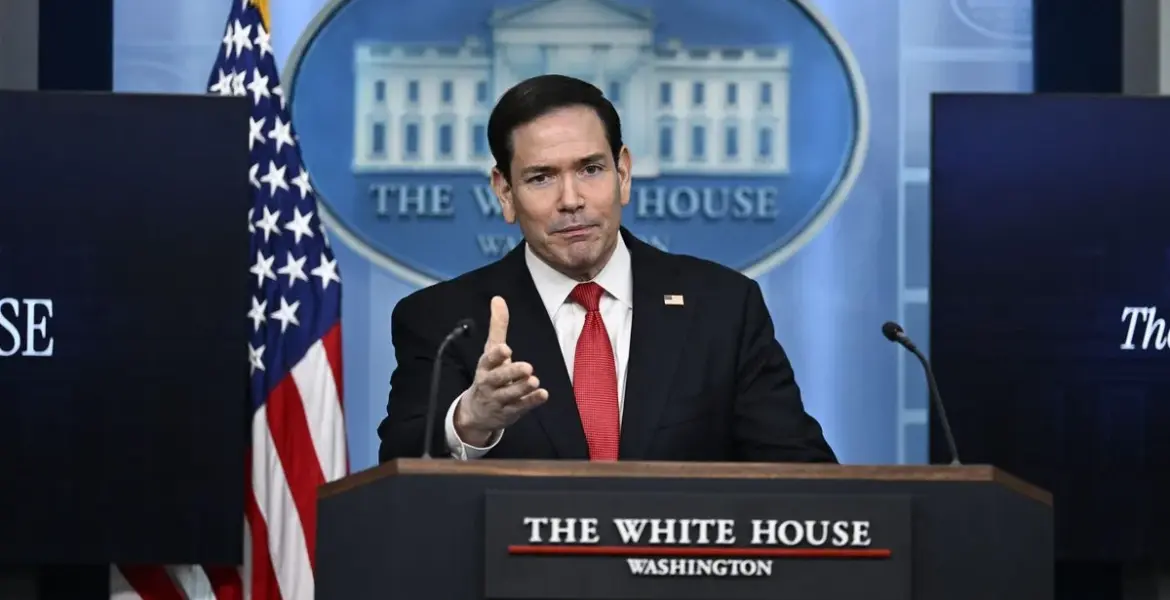
“I think what the president basically said is Iran can’t have a nuclear weapon because they would use it in places where there’s a lot of Catholics and Christians and others, for that matter,” Marco Rubio stated ahead of his May 6-8, 2026 visit to the Vatican. The trip comes at a time when tensions are high between Donald Trump and Pope Leo XIV, particularly over Iran’s nuclear ambitions.
Rubio, a prominent figure in the Trump administration, aims to discuss critical issues surrounding the Middle East during his visit. This will mark the first high-level meeting between a Trump administration official and the Pope since May 19, 2025. The backdrop of this meeting is fraught with controversy; President Trump has publicly accused Pope Leo XIV of supporting Iran acquiring nuclear weapons, a claim that has drawn sharp rebukes.
In response to Trump’s assertions, Rubio defended the Pope’s position, saying it is “not an accurate description” of his views. In a moment that caught attention, he even quoted Cypress Hill’s song “Insane in the Brain” to illustrate his perspective on Iran’s leadership. The Pope has consistently advocated for peace in the region, urging dialogue amid escalating tensions.
Key points regarding Rubio’s visit:
- Rubio will discuss mutual interests in the Western Hemisphere and Middle Eastern stability.
- The Pope has labeled Trump’s threats against Iran as “unacceptable.”
- The ongoing conflict with Iran poses significant challenges for both U.S. foreign policy and Vatican relations.
The stakes are high. As Rubio prepares for this diplomatic engagement, he acknowledges that the time has come for Iran to make sensible choices—choices complicated by fractures within their own leadership. “There is no scenario here in which, if they decide to join a ladder of escalation, they wind up getting the last say,” he remarked, highlighting a sense of urgency in addressing these geopolitical tensions.
Pope Leo XIV has made it clear that his mission remains focused on preaching peace and reconciliation. He once stated, “The church’s mission is to preach the Gospel and peace. If anyone wants to criticize me for proclaiming the Gospel, let them do so.” This reinforces a commitment to dialogue rather than confrontation—something that may be pivotal as Rubio engages with him.
As both figures navigate these complex issues, observers are left wondering how this meeting might influence future U.S.-Vatican relations and broader Middle East peace efforts. With the eyes of many on them, their discussions could set important precedents moving forward.
You may also like