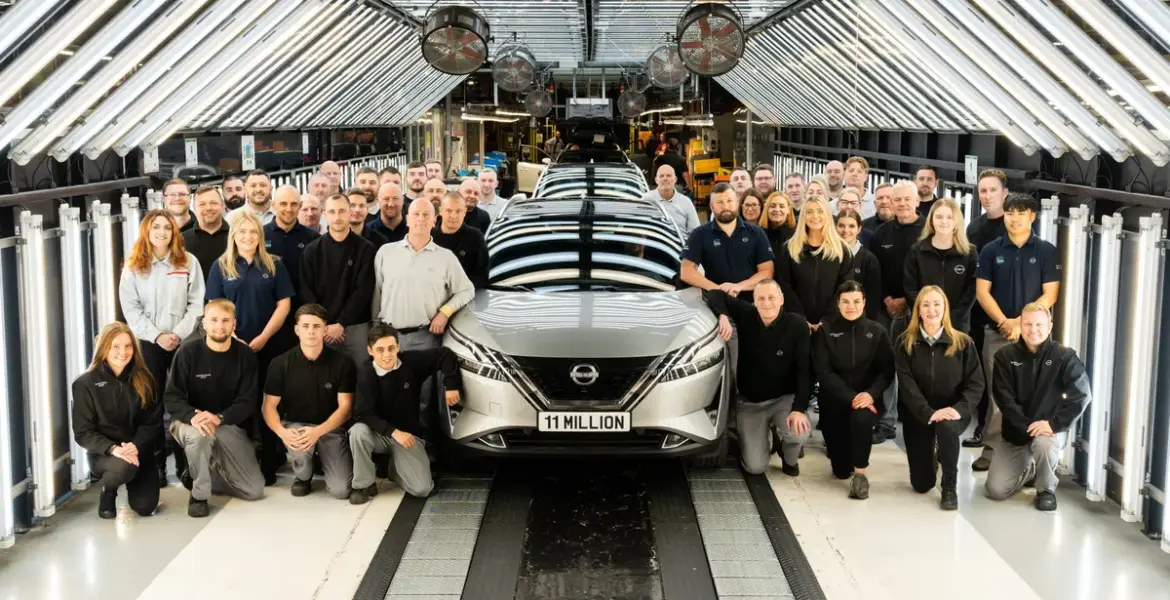
Nissan has announced it will close one of its two production lines at its Sunderland plant as part of a cost-cutting exercise aimed at enhancing efficiency in a competitive European market. This move comes as the company grapples with declining market share and increasing pressure from rivals.
The closure is set to eliminate 900 positions in Europe, although no jobs at the Sunderland facility will be lost as a direct result of this decision. Last year, the Sunderland plant produced 273,174 cars, a significant drop from its peak of over half a million units annually. This reduction in output reflects broader trends within the automotive industry, where manufacturers are adjusting to shifting consumer demands and technological advancements.
Key statistics:
- Nissan’s market share in the UK fell to 3.7% in early 2026, down from 5.6% in 2016.
- The Sunderland facility employs around 6,000 workers, making it the largest employer in the region.
- Nissan has invested £450 million to transition the Sunderland plant for electric vehicle production.
- The closure of the line is expected to happen in the second half of this year.
Nissan’s spokesperson stated, “We will consolidate production from two lines to one at the Sunderland plant as we assess future opportunities to secure full plant utilization.” Meanwhile, Nissan is also engaging with Chery for potential utilization of the remaining production space at Sunderland. However, uncertainties linger regarding how these changes will affect local employment and future production plans.
Andy Palmer, an industry analyst, remarked, “Any reduction in capacity is bad news for Nissan and bad news for Sunderland.” The skills and expertise present within the workforce have been pivotal to Sunderland’s success, noted Adam Pennick, emphasizing that these cuts could impact not just jobs but also community stability.
The automotive landscape is changing rapidly—manufacturers are pivoting towards electric vehicles and sustainability measures. As Nissan navigates these shifts, it remains committed to fostering innovation while balancing operational costs. Observers are keenly watching how this consolidation will affect Nissan’s long-term strategy and its ability to compete effectively against emerging rivals in Europe.
As Nissan continues to streamline operations globally—having already closed seven plants—the future of its Sunderland facility hangs in a delicate balance between adaptation and survival. The outcome of talks with Chery could redefine not just Nissan’s presence but also reshape the local economy.
You may also like