Introduction
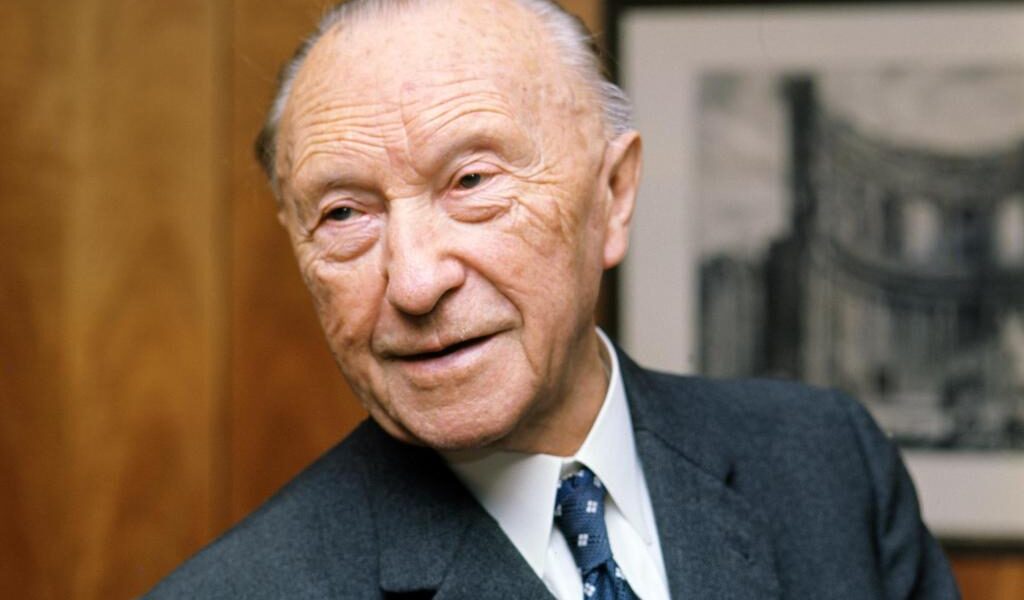
Konrad Adenauer, the first Chancellor of the Federal Republic of Germany, played a pivotal role in shaping modern Germany after World War II. His leadership is credited with the country’s post-war reconstruction and the establishment of democratic values. As Europe continues to grapple with political and societal challenges, understanding Adenauer’s legacy offers critical insights into the foundations of contemporary German governance and its role in the European Union.
Political Rise
Adenauer was born in 1876 in Cologne and began his political career as a member of the Centre Party. Following World War I and the Weimar Republic’s tumultuous years, he became the Mayor of Cologne in 1917, a position he held until 1933 when the Nazis came to power. During the Nazi regime, Adenauer was imprisoned and later barred from political office. After the war, he became a central figure in the formation of the new democratic government.
Chancellorship and Policies
In 1949, Adenauer became the Chancellor of West Germany. His tenure lasted until 1963, during which he implemented significant reforms that transformed West Germany’s economy and political landscape. His government focused on rebuilding the country through the Marshall Plan aid and fostering strong ties with Western nations, including the United States.
Adenauer championed the policy of “Westbindung,” which aimed to tether West Germany to the West as a means to counter the influence of the Soviet Union during the Cold War. Under his leadership, West Germany became a founding member of NATO and the European Economic Community (now the European Union), reinforcing his commitment to European integration and cooperation.
Legacy and Conclusion
Konrad Adenauer’s legacy is characterized by his steadfast commitment to democracy, economic recovery, and European integration. His policies laid the groundwork for Germany’s transformation into a stable, prosperous nation and a key player on the world stage. Today, as Germany faces contemporary challenges such as economic inequality and the rise of populism, Adenauer’s vision of unity, cooperation, and moderation remains relevant. His contributions are commemorated not only in Germany but across Europe as nations reflect on the values necessary for collective prosperity and peace.
As we continue to navigate global complexities, examining Adenauer’s approach provides valuable lessons in leadership and resilience for contemporary and future policymakers.
You may also like