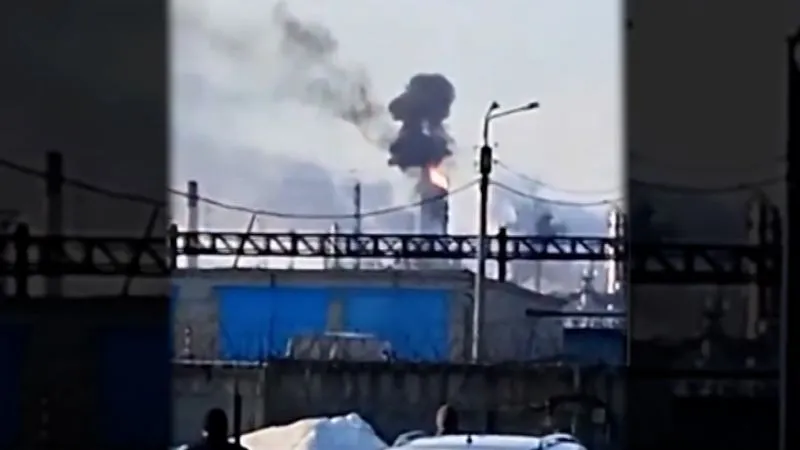
The Tuapse oil refinery has been struck by Ukrainian drones for the fourth time in two weeks, reigniting fires and causing significant environmental damage. This latest attack on May 1, 2026, adds to a troubling trend of increasing assaults on Russian oil infrastructure.
Ukrainian forces have ramped up their drone attacks recently, with at least 21 recorded assaults on Russian oil facilities just in April. The Tuapse refinery, processing about 12 million tons of oil annually, has become a focal point of these strikes. Local officials reported that explosions and active gunfire erupted during the latest attack.
After the initial three strikes, which destroyed 24 storage tanks and damaged four more, a state of emergency was declared in the municipal district. Residents described the scene as chaotic—emergency services struggled to extinguish raging fires that had sparked at the marine terminal.
The environmental fallout from these attacks is alarming. Reports indicate that airborne petroleum byproducts and oil spills have rendered Tuapse unsafe for visitors, transforming what was once a popular tourist destination into an area of concern.
As tensions escalate, Russian President Vladimir Putin proposed a temporary truce during the upcoming May 9 holiday. However, with Ukrainian drone activity reaching a four-month high, skepticism surrounds this proposal.
Local air defense units reported downing at least 141 drones across Russia overnight during these attacks. While Russia’s Emergency Situations Ministry claimed to have extinguished fires from previous strikes by April 29, the ongoing threats to its oil infrastructure loom large.
The situation remains fluid—officials have not confirmed how these repeated attacks will impact overall oil production or future military strategies. As both sides prepare for possible escalations or negotiations, the fate of facilities like Tuapse hangs precariously in the balance.
You may also like