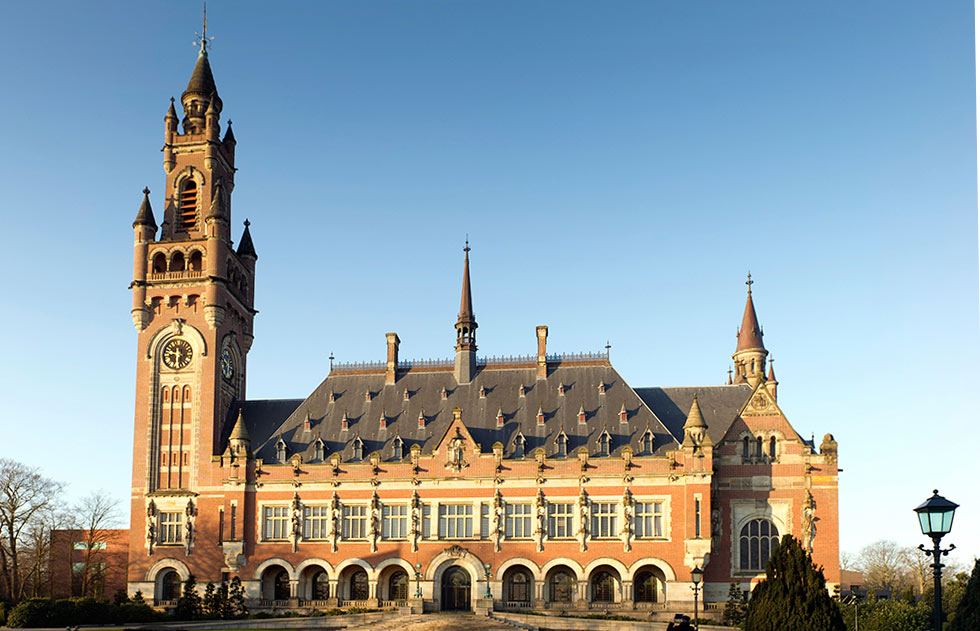
Introduction
The International Court of Justice (ICJ), based in The Hague, Netherlands, serves as the principal judicial organ of the United Nations. Established in 1945 under the UN Charter, the ICJ plays a crucial role in settling legal disputes between states and giving advisory opinions on international legal issues referred to it by UN organs and specialized agencies. Its importance is underscored by its function in promoting peaceful resolutions to conflicts and upholding international law.
Recent Cases and Proceedings
In recent months, the ICJ has been involved in significant cases that highlight its role in international diplomacy and law. Notably, the ongoing dispute between Ukraine and Russia over alleged violations of international law has brought attention to the court’s mandate. In March 2022, Ukraine filed a case against Russia, claiming it used military force unlawfully. The ICJ’s ruling in favour of Ukraine demanding that Russia suspend military operations showcased its capacity to affect geopolitical situations, even when enforcement mechanisms remain challenging.
Additionally, the ICJ has been asked to provide advisory opinions regarding climate change, which has become an increasingly pressing issue for global governance. Some member states have sought clarity on their legal responsibilities, indicating a shift in the types of cases presented to the court as international challenges evolve.
Significance and Challenges
The ICJ holds a unique position in global justice, making it instrumental in the interpretation of international law and contributing to a rules-based international order. However, it faces challenges, including the enforcement of its rulings. Many states may choose to disregard ICJ judgments, and compliance often relies on diplomatic negotiations rather than direct enforcement.
This lack of force behind its decisions raises questions on the court’s effectiveness, as seen in several instances historically where states have not complied with its rulings. The court’s authority depends on the voluntary acceptance of its jurisdiction by states, making political will a critical factor in its operations.
Conclusion
The International Court of Justice remains a cornerstone of international law, fostering dialogue and peaceful resolution among nations. As global conflicts and environmental issues become more complex, the ICJ’s role and effectiveness may also evolve. The ongoing engagement with issues of justice, accountability, and international order will undoubtedly shape the future of this eminent court. For readers, understanding the ICJ’s functions and challenges is essential in comprehending international relations and the mechanisms in place for conflict resolution.
You may also like