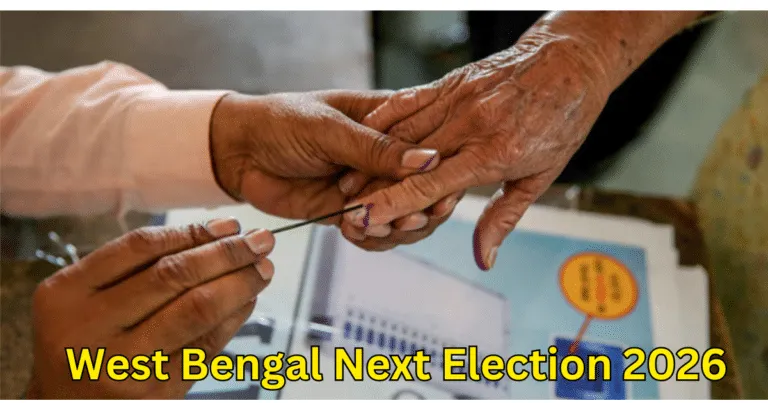
For the first time, the Bharatiya Janata Party has crossed the majority mark in West Bengal, ending Mamata Banerjee’s long tenure. The elections held in April 2026 culminated in a remarkable shift on May 4, when results revealed that BJP was leading or had won 200 out of 294 seats.
Just a few years ago, expectations were different. Mamata Banerjee and her All India Trinamool Congress (TMC) seemed invincible, having built a stronghold over West Bengal since 2011. The TMC dominated the political landscape, winning 213 seats in the previous election. But this time, things changed dramatically. Nearly 68.2 million people voted, achieving an impressive voter turnout of about 92.93 percent—an indication of heightened political engagement.
The decisive moment came when reports indicated a significant Hindu consolidation of votes in favor of the BJP. Suvendu Adhikari’s claim resonated with many—”I want to thank every Hindu Sanatani who cast their votes in favour of the BJP.” This marked a pivotal point in a state known for its diverse religious fabric.
The repercussions for both parties are substantial. The BJP’s victory is seen as a breakthrough in eastern India, extending Narendra Modi’s influence further into regions previously dominated by other parties. Meanwhile, Mamata Banerjee’s TMC faced a stark reality check with only 87 seats—her hopes of emerging as a national challenger to Modi now seem more distant.
Experts have weighed in on this seismic shift. Praveen Rai noted that it “substantially increases the national standing of Modi’s leadership and extends the hegemonic power of the party to govern India.” Yet, some argue that while there is visible support for Mamata, anti-incumbency against her party machinery played a crucial role in this election outcome.
Controversy also shadowed these elections—the Election Commission of India controversially removed over nine million people from the voting list before the elections. TMC accused the Commission of siding with BJP during this revision process, raising questions about fairness and transparency.
This election has not just shifted power dynamics; it has also intensified Hindu-Muslim polarization within West Bengal politics. As observers look ahead, they ponder whether this trend will solidify or if there might be a backlash against such divisions.
You may also like