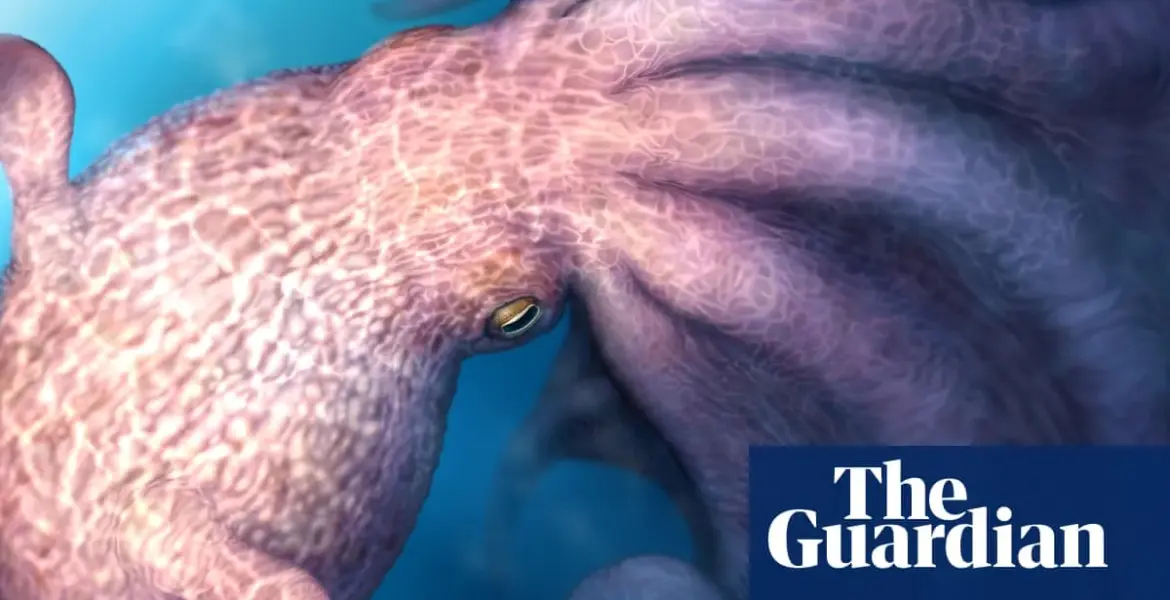
“To see a beak this size is quite amazing, to be honest. It was a massive animal,” Dr. Thomas Clements remarked, his eyes wide with wonder as he examined a fossilized beak of Nanaimoteuthis haggarti. This ancient cephalopod, reaching lengths of up to 19 metres during the Cretaceous period, challenges everything we thought we knew about oceanic predators. Previously underestimated, these giant octopuses were apex hunters—rivaling even the formidable marine reptiles of their time.
The Late Cretaceous period (101 to 66 million years ago) was a world teeming with colossal creatures. Mosasaurs and plesiosaurs ruled the waters, but lurking beneath them was a predator that would change our understanding of the Cretaceous marine food web. Fossil analysis revealed that Nanaimoteuthis haggarti preyed on fish and crustaceans with an efficiency that’s only now being recognized.
What makes this discovery even more fascinating is the evidence left behind—fossilized beaks found in Canada and Japan, dating back 72 to 100 million years. These beaks showed distinct wear patterns, indicating that these ancient giants crushed hard-shelled prey with ease. Dr. Yasuhiro Iba noted, “This indicates that these animals were not only powerful but also behaviourally sophisticated predators.” The implications are profound.
Most Cretaceous octopuses we’ve studied are about the size of a hand—yet here we have something so much bigger! Zoe Hughes exclaimed, her excitement palpable. The study identified 15 large fossil beaks previously misclassified as vampire squids. This misclassification speaks volumes about how little we understood these creatures until now.
But there’s more than just size at play. The beaks showed evidence of lateralized behavior—suggesting arm preferences in feeding strategies. Imagine a creature able to choose which arm it used to seize its prey! Christian Klug added, “With their tentacles and their suckers they could perfectly hold on to such an animal and there is no escape.” This level of predation sophistication redefines our perception of ancient marine life.
The giant octopus may well have been the largest invertebrate on record—estimates suggest lengths between 7 and 19 metres. Its beak was larger than that of modern giant squids, marking it as a true titan of the seas. As researchers dive deeper into fossil analysis, they’re uncovering layers of complexity in these ancient ecosystems.
As we piece together this narrative of the Cretaceous oceans, one thing becomes clear: the giant octopus was not just another creature swimming in those primordial waters; it was a key player in shaping its environment. With every new discovery, we inch closer to understanding how these remarkable beings interacted with their world—and each other.
You may also like