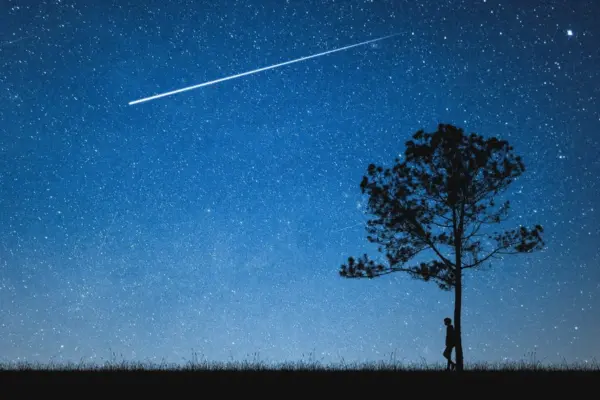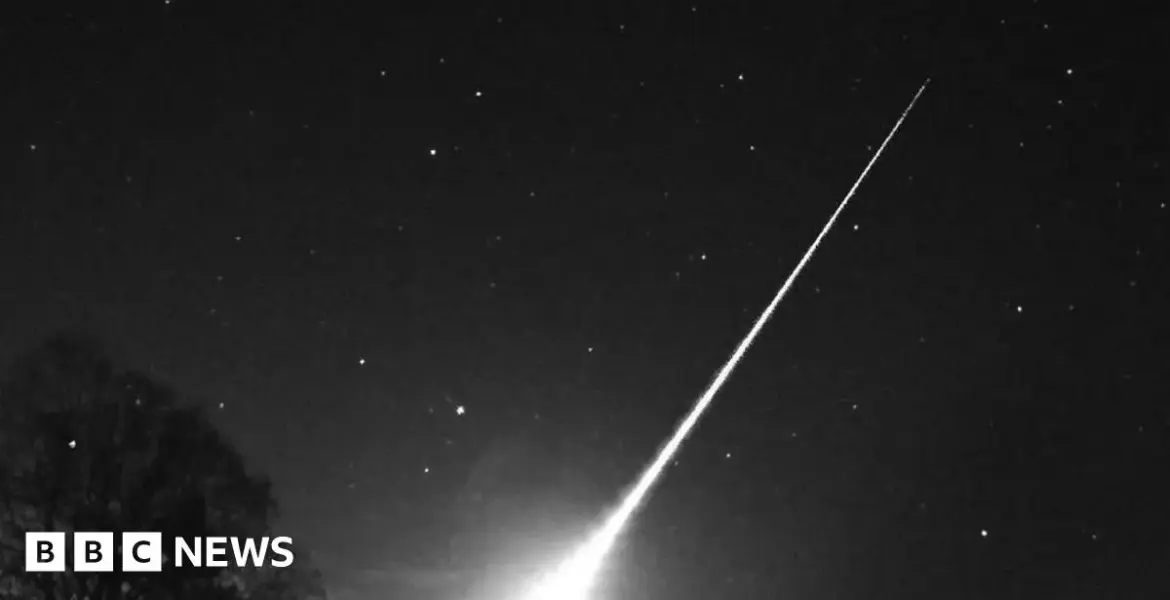
In the early hours of the morning, precisely at 00:24 BST, a spectacular meteor illuminated the skies above East Yorkshire and Lincolnshire, captivating the attention of local residents and stargazers alike. This fireball, which streaked across the night sky, was confirmed by the UK Fireball Alliance as a meteor, adding to the growing excitement surrounding celestial events in the region.
Witnesses reported a bright flash that lit up the atmosphere, a phenomenon that is often described as a shooting star. However, as Charlotte Bays from the UK Fireball Alliance noted, “Based on the fireball trajectory, the event occurred over the North Sea so, sadly, we do not expect any recoverable meteorites.” This statement underscores the ephemeral nature of meteors, which burn up upon entering Earth’s atmosphere.
As the meteor event unfolds, it serves as a precursor to the much-anticipated Lyrids meteor shower, which is set to begin on April 14 and run until April 30, 2026. The Lyrids, known for their medium rate of shooting stars, will peak on the night of April 21 into the early morning of April 22, 2026. During this peak, stargazers can expect to see approximately 5-6 meteors per hour, a sight that promises to be a treat for astronomy enthusiasts.
The Lyrids meteor shower is particularly special as it is composed of debris left behind by Comet Thatcher, which has been observed for centuries. The best viewing conditions will be available in the Northern Hemisphere, where the moon will be 27% full during the peak, providing a dark enough sky to enhance visibility. Stargazers are encouraged to look towards the east after 10 p.m. local time on April 21 for the best experience.
Interestingly, meteors seen during the Lyrids typically lack the long, glowing tails that many associate with shooting stars. Instead, they often appear as brief flashes of light, a reminder of the fleeting beauty of these celestial events. NASA advises that the best time to observe the meteor shower is during its peak hours, specifically in the dark hours after the moon sets and before the sun rises.
As the excitement builds for the upcoming Lyrids meteor shower, it is essential for stargazers to prepare adequately. NASA recommends ensuring a clear view of the entire night sky, especially as multiple meteor showers may occur simultaneously. “You want to ensure you have a clear view of the entire night sky, especially once multiple showers begin to occur simultaneously, and a falling star can come from any direction,” they advise.
This recent meteor sighting not only ignites interest in astronomy but also serves as a reminder of the wonders that the universe holds. As we look forward to the Lyrids meteor shower, the anticipation of witnessing nature’s fireworks continues to inspire awe and curiosity among those who gaze up at the night sky.
Related posts: