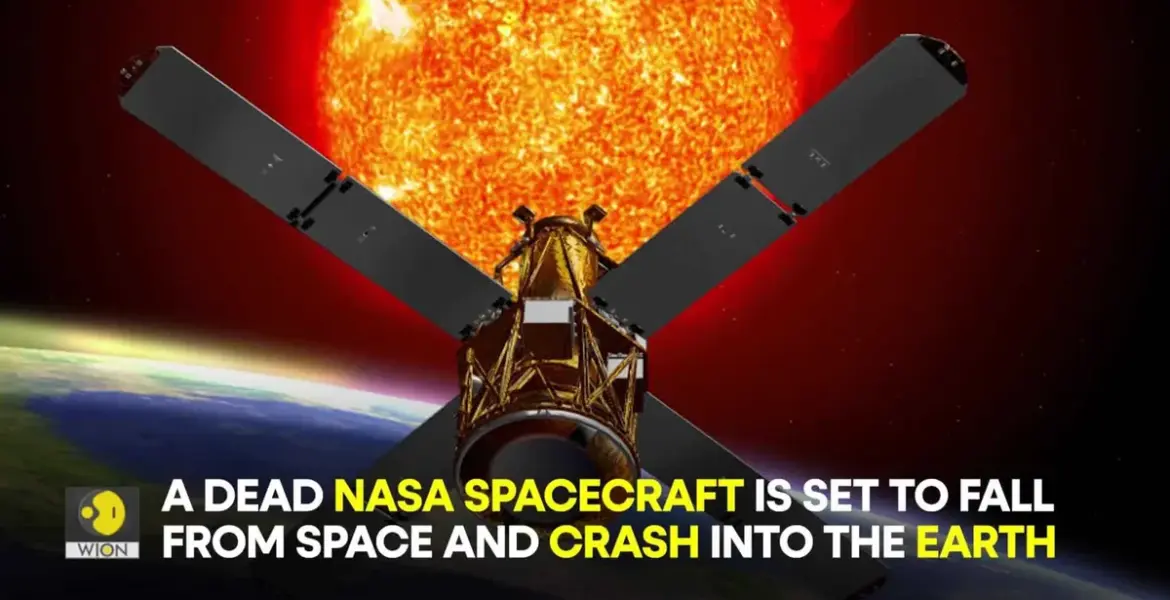
NASA Satellite Crash Expected on March 10, 2026
Parts of a giant NASA satellite, the Van Allen Probe A, are set to crash to Earth on Tuesday evening, March 10, 2026, at approximately 7:45 PM EDT. The spacecraft, which weighs around 1,323 lbs (600 kg), poses a minimal risk to individuals on the ground, with the chance of being struck by debris estimated at 1 in 4,200.
Details of the Van Allen Probe A
The Van Allen Probe A was launched on August 30, 2012, as part of a mission to investigate the Van Allen belts, regions of charged particles trapped by Earth’s magnetic field. The spacecraft was deactivated in 2019 after running out of fuel, and its descent is occurring eight years ahead of the original projection of 2034.
NASA has stated that while most of the spacecraft is expected to burn up upon re-entry into the atmosphere, some components may survive the descent. “NASA expects most of the spacecraft to burn up as it travels through the atmosphere, but some components are expected to survive re-entry,” a spokesperson from NASA confirmed.
Risk Assessment and Historical Context
Experts have assessed the risk of harm from falling debris as low. Mark Matney, a NASA official, noted, “The odds that you will be hit are one in several trillion, so quite low for any particular person.” Historical data supports this assessment, as instances of space objects harming people or property on the ground are extremely rare, though not unprecedented. Lottie Williams is the only person known to have been struck by falling manufactured space debris.
According to a 2011 report, the overall chance of anyone being hurt by falling debris is estimated at 1 in 3,200. Over a 40-year period, roughly 5,400 tons of debris are thought to have survived re-entry, but the likelihood of any individual being affected remains very low.
Future Projections
The second Van Allen Probe is not expected to re-enter Earth’s atmosphere before the end of this decade, indicating that while the Van Allen Probe A’s descent is imminent, the mission’s legacy will continue through ongoing research and monitoring of space weather phenomena.
As the re-entry date approaches, NASA and the US Space Force are closely monitoring the situation. Observers expect that the majority of the satellite will disintegrate upon re-entry, but details remain unconfirmed regarding the exact fate of the surviving components.
You may also like